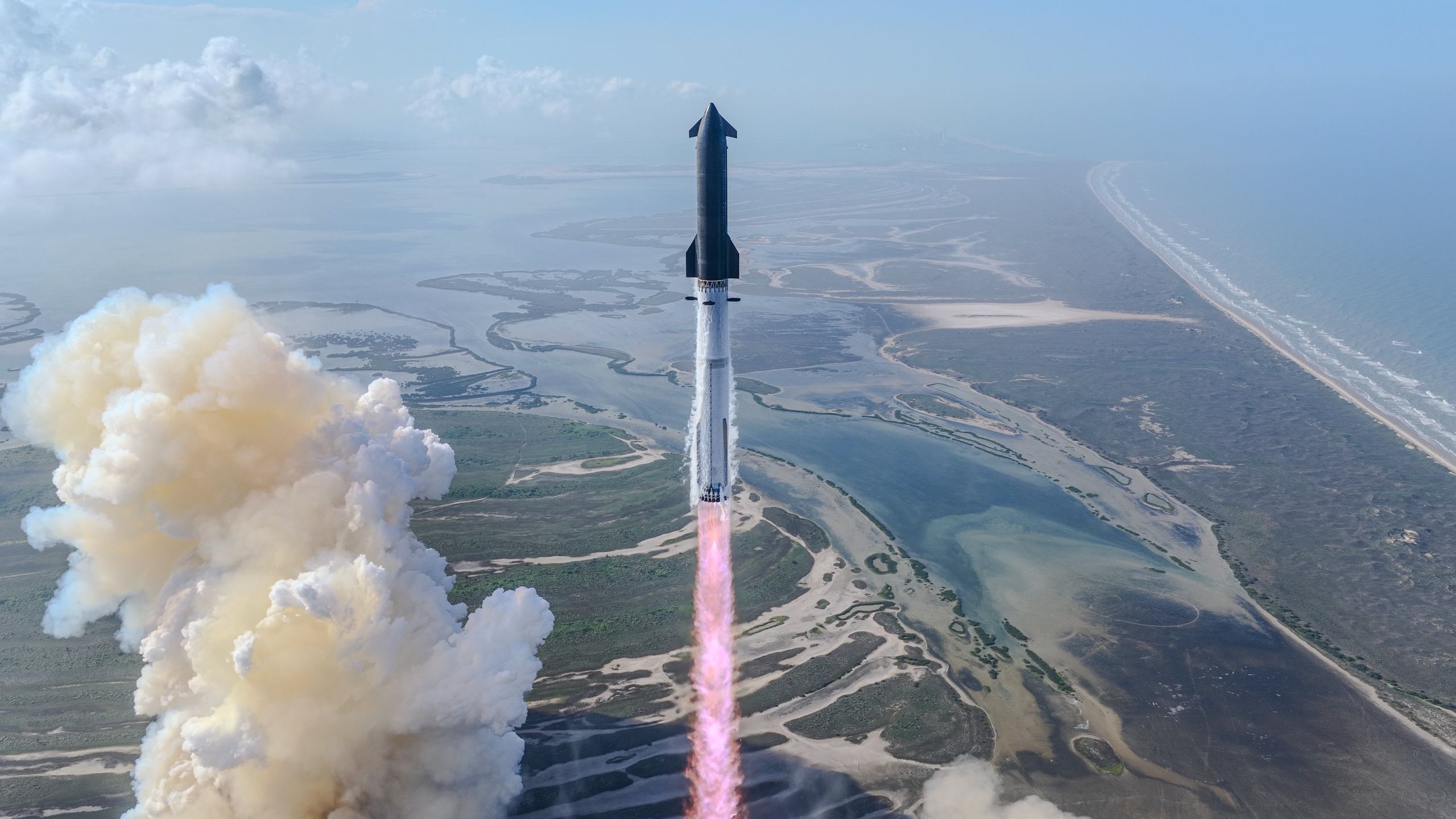
SpaceX has delayed its next launch of the Starship megarocket by six days, now set for September 28, 2026, instead of the previously planned September 22. The company did not provide a reason for the postponement.
Read More
The upcoming mission, designated Starship Flight 14, will launch from SpaceX's Starbase in South Texas during a 75-minute window opening at 8:15 a.m. EDT (1215 GMT, 7:15 a.m. local time). The launch will be available for live viewing on Space.com.
This flight marks the 14th overall for Starship, which first flew in April 2023. Until now, all previous missions have been suborbital. SpaceX noted that reaching orbit is a crucial step for developing a fully reusable Starship. The mission will also deploy the new Starlink V3 satellites, aimed at enhancing global connectivity.
Currently, the Starlink constellation consists of over 11,000 satellites, and Flight 14 will carry 26 of the new V3 units. Among these, three satellites will be equipped with cameras to capture images of the heat shield on the upper stage of the vehicle, known as Ship, following deployment.
If successful, Ship will complete six orbits of Earth at an altitude of approximately 171 miles (275 kilometers) and splash down in the Pacific Ocean west of Chile about 10 hours post-launch. In contrast to earlier flights that lasted around 65 minutes, this mission aims for a full orbital trajectory.
The first-stage booster, Super Heavy, is expected to splash down in the Gulf of Mexico about seven minutes after liftoff. Unlike previous attempts where the booster was caught by the tower's "chopsticks," this flight will not attempt a catch for either Ship or Super Heavy.
As stated by Musk, future missions will focus on refining recovery methods, including tower catches and in-orbit refueling essential for missions to the Moon, Mars, and beyond. This delay was last updated on September 17 at 1:35 p.m. ET and originally reported with a target launch of September 22.