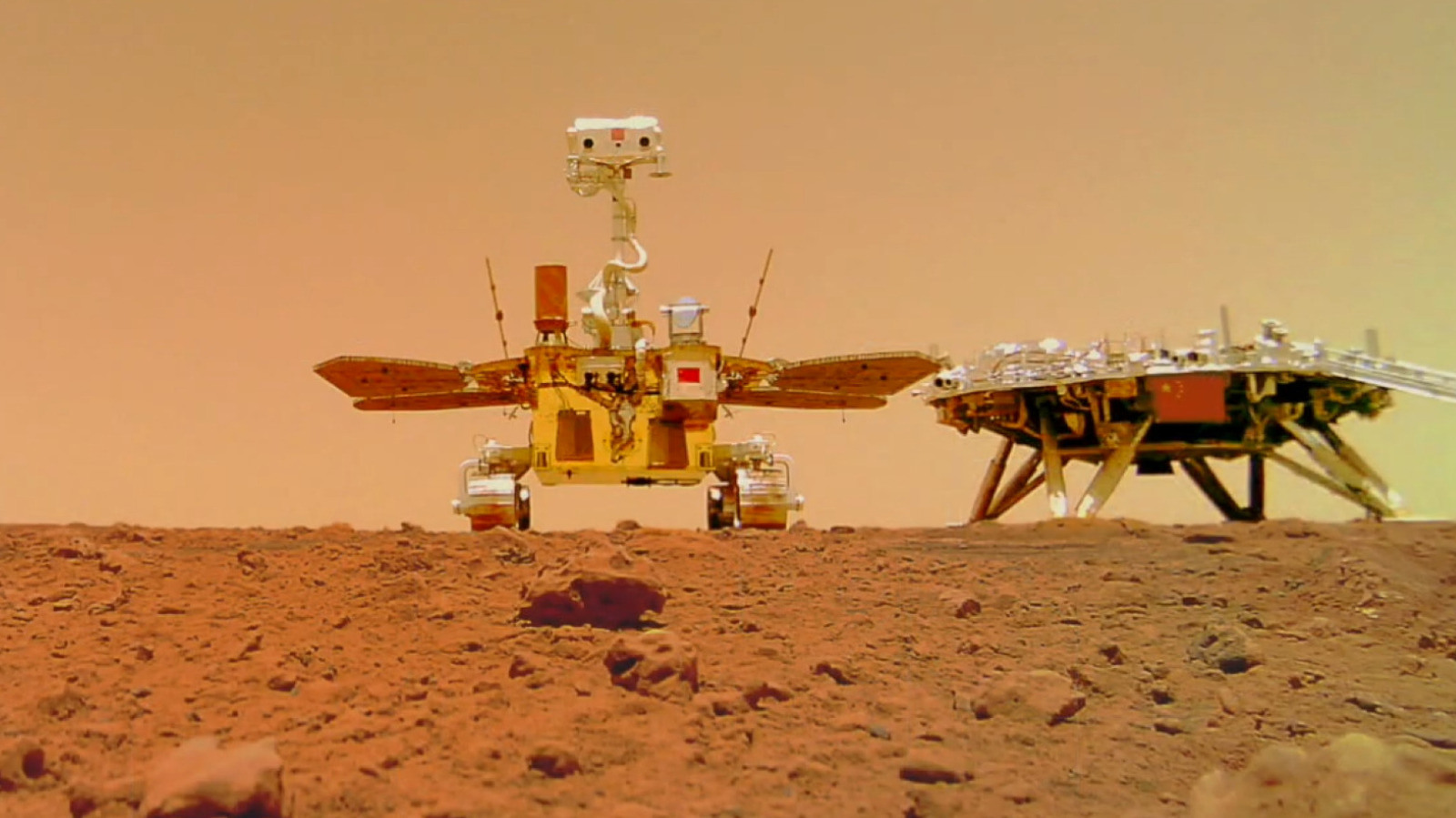
China is advancing its space capabilities, aiming for a moon landing by 2030 and developing significant rocket reusability this year. The country's upcoming Tianwen 3 mission is poised to execute a sample-collection-and-return operation on Mars, with a planned launch in 2028 and an expected return of Martian samples to Earth in 2031.
Read More
This mission could mark the first successful return of Mars samples for in-depth analysis. NASA’s Perseverance rover, operational since early 2021, has been collecting samples deposited in titanium tubes on the Martian surface. However, NASA’s own Mars sample return mission has faced delays and was omitted from a recently approved funding bill, raising the possibility that China could be the first to successfully return Martian samples.
The Tianwen 3 mission will utilize two Long March 5 rockets: one for the lander and ascent vehicle, and the other for a Mars orbiter. The lander is designed to collect about 500 grams (17.6 ounces) of Martian rock and soil using a scoop, drill, and a helicopter. After collecting the samples, they will be placed in the ascent vehicle, which will then launch into Mars orbit to rendezvous with the orbiter that will bring the samples back to Earth.
The Tianwen 3 mission follows Tianwen 2, which is currently retrieving samples from a near-Earth asteroid named Kamoʻoalewa (2016 HO3) and is expected to return them in 2027. China’s mission will also incorporate lessons from NASA’s Ingenuity-class helicopter technology, which features advanced capabilities for aerial exploration on Mars.
While NASA has shifted its focus towards human exploration plans, including a moon landing targeted for 2028 and potential Mars missions by the late 2030s, it has deprioritized the Mars sample return mission. The U.S. aims to prioritize finding evidence of life on Mars through crewed missions rather than robotic sample returns, as detailed in the Commerce, Justice, Science, and Related Agencies Appropriations Act. This strategic decision may reflect broader goals within U.S. space policy, potentially giving China an opportunity to secure a significant achievement in Mars exploration.