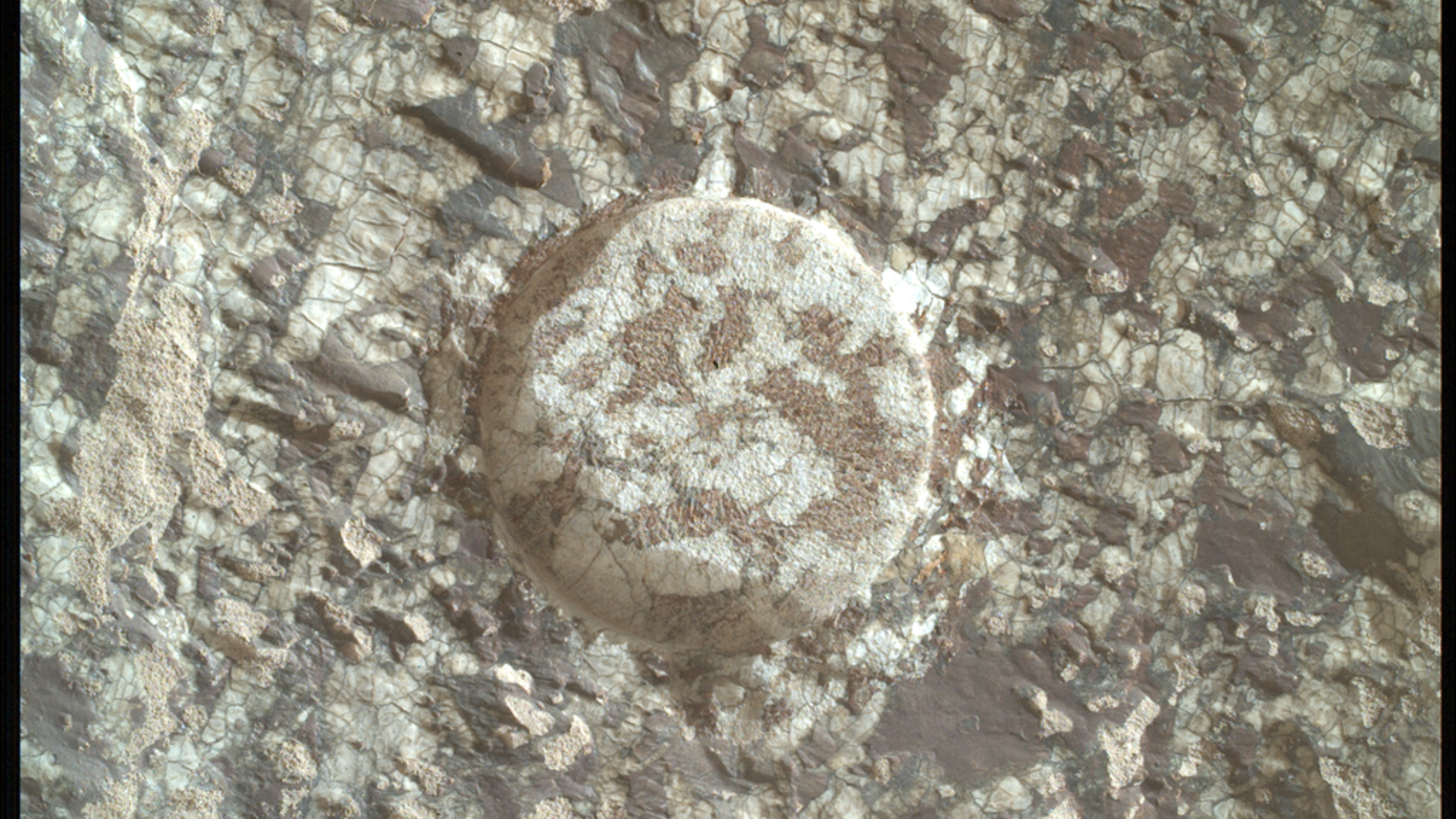
NASA's Perseverance rover is currently surveying the Martian landscape known as "Lac de Charmes," an area described by the mission team as the "Wild West frontier" of Mars. This exploration marks over five years of study on the planet's surface, with the rover focusing on this distinctive region west of the Jezero Crater, where it successfully landed.
Read More
The "Wild West frontier" features various valleys and ridges and is significant for hosting some of the oldest rock formations encountered by Perseverance. As the rover navigated to Lac de Charmes, it collected valuable data that will help scientists understand the geological history and evolution of the area.
Recent mission updates indicate that Perseverance is not only exploring this ancient terrain but is also utilizing a modified processor initially designed for communication with the Ingenuity helicopter. Findings suggest that the igneous rocks in this region could have originated from cooling lava, magma, or possibly from impacts by asteroids, which were common during Mars' early history.
Athanasios (Thanos) Klidaras, a Ph.D. candidate at Purdue University, noted that these rocks provide insights into Mars' formative years, long before the sedimentary rocks formed in the Jezero Crater’s rivers and lakes. Klidaras emphasized that studying these ancient formations can enhance our understanding of early Martian history, as well as the evolution of rocky planets during the solar system's volatile beginnings.