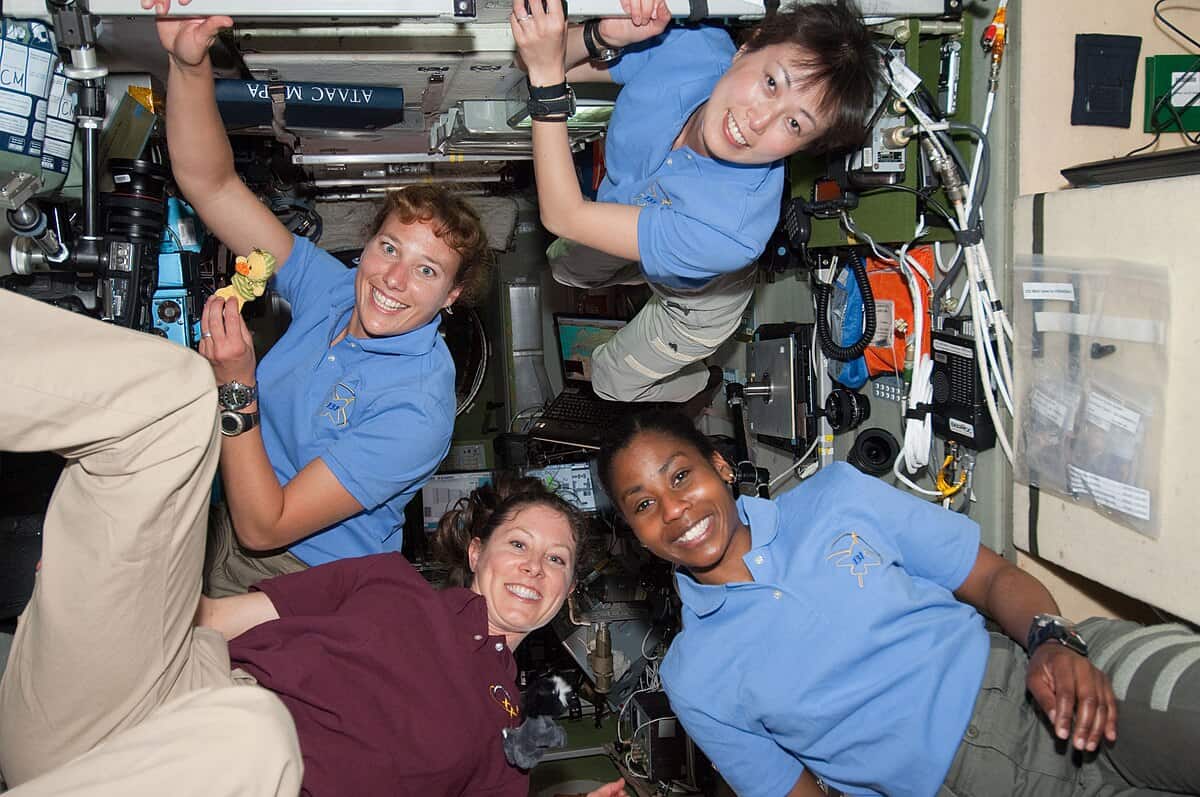
Historically, NASA’s astronaut program was dominated by men, primarily military test pilots. The notion of a woman participating in space exploration was once met with skepticism, as NASA officials voiced doubts about the need for female astronauts throughout the 1960s.
Read More
However, in 1978, six women entered the astronaut corps, marking a significant shift in NASA's history. These women—Sally Ride, Judy Resnik, Anna Fisher, Kathy Sullivan, Rhea Seddon, and Shannon Lucid—represented the beginning of an era of change, as explored in Valerie Neal’s new book, *On a Mission: The Smithsonian History of US Women Astronauts*, which will be released on October 28. Neal, a former curator at the Smithsonian’s National Air and Space Museum, details the nearly 50-year journey of women in NASA's astronaut corps, from the shuttle missions to the upcoming Artemis missions aimed at returning humans to the Moon.
Neal conducted interviews with thirty of the thirty-two living U.S. women astronauts, offering insights into their diverse backgrounds as parents, physicians, pilots, oceanographers, chemists, and engineers. These women faced a system that often overlooked their needs, from ill-fitting spacesuits to training environments designed for male bodies. Neal recounts that each astronaut felt a strong sense of responsibility to succeed, not just for herself but for future generations of women.
The narrative emphasizes the gradual changes at NASA, which evolved through individual persistence rather than sweeping reforms. The early women astronauts did not see themselves as revolutionaries but as professionals committed to their fields. They became instrumental in reshaping the image of what an astronaut could be.
Today, NASA boasts one of the most diverse astronaut corps in the government. Women have taken on roles as commanders of the International Space Station and have participated in spacewalks. Yet, as Neal points out, the fight for inclusion continues, transforming in nature rather than disappearing entirely.
Neal reflects on critical moments in women’s space travel history, highlighting NASA’s decision in the early 1970s to develop the space shuttle and categorize astronauts as pilots and mission specialists. This shift allowed a broader range of candidates, including women, to pursue astronaut roles. The introduction of mission specialists broadened the talent pool, which previously consisted primarily of white male military test pilots.
Through her interviews, Neal uncovered that all the women astronauts shared a common sense of obligation to pave the way for future generations. While men in similar positions may not feel the same burden of representation, women astronauts remain acutely aware that their performance could influence the opportunities available for those who follow.
Neal’s research also reveals ongoing challenges, including practical issues such as spacesuit fit and subtle biases. NASA aims to address these concerns with the development of next-generation spacesuits for the Artemis missions, designed to accommodate all body types.
The book illustrates not only the achievements of these pioneering women but also the reflection of broader social changes in America since the 1960s, including advancements in civil rights and women's rights. Neal hopes that young readers, especially aspiring female scientists and engineers, will be inspired to follow their passions and pursue careers in STEM fields, including space exploration.