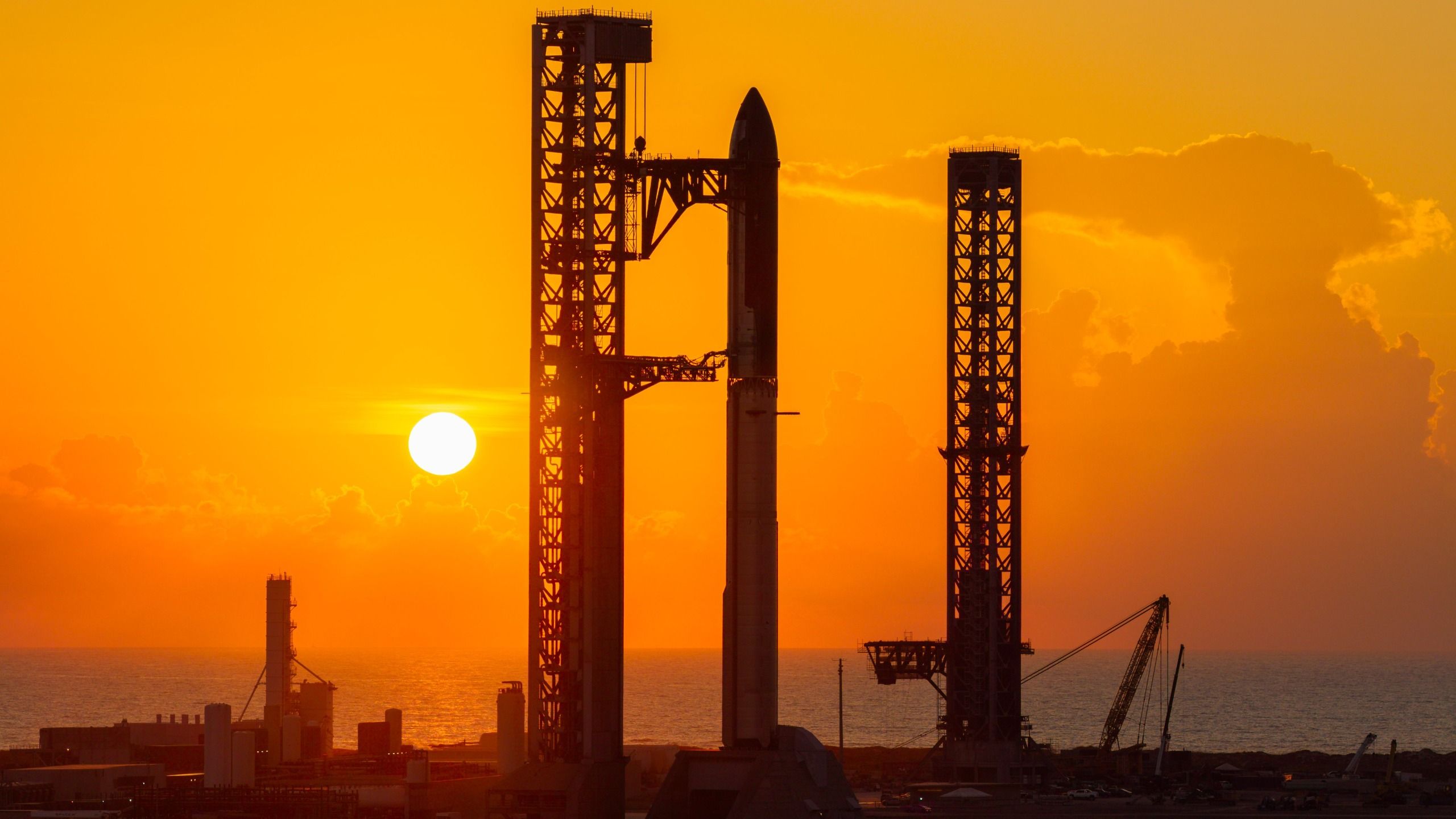
SpaceX's Starship megarocket is set to launch into orbit for the first time on Monday, September 28. The launch will take place from SpaceX's Starbase site in South Texas during a 75-minute window beginning at 8:15 a.m. EDT (12:15 GMT; 7:15 a.m. local Texas time). Live coverage will start approximately 30 minutes before liftoff and will be available to stream via SpaceX.
Read More
The Starship rocket, which stands at 407 feet (124 meters) tall when fully stacked, is the largest and most powerful rocket ever constructed. Both the Super Heavy booster and the Ship upper-stage spacecraft are designed for full reusability, a milestone that SpaceX describes as the "holy grail of rocketry." SpaceX aims for Starship to facilitate humanity's exploration of the Moon and Mars, although the vehicle remains in the flight-test stage.
Following its debut in April 2023, Starship has completed 13 missions, all of which were suborbital. The upcoming launch will mark its 14th flight, which aims to place the Ship into Earth orbit. This mission will deploy 26 next-generation Starlink Version 3 internet satellites. Elon Musk envisions a future megaconstellation of up to 100,000 spacecraft, adding to SpaceX's existing fleet of approximately 11,000 Starlink satellites.
After circling the Earth six times, the Ship will splash down in the Pacific Ocean, off the coast of Chile, nearly 10 hours post-launch. In contrast, the Super Heavy booster is scheduled to splash down in the Gulf of Mexico around seven minutes after liftoff, consistent with prior missions.
SpaceX plans to eventually return both the Super Heavy booster and the Ship to the launch pad for retrieval by the launch tower’s "chopstick" arms, a process already tested successfully with Super Heavy but not yet attempted with the Ship. Additionally, future missions beyond Earth orbit will necessitate refueling by "tanker" Ships, a capability not yet demonstrated.
As part of preparations for crewed missions, the Ship will need to be equipped with a life-support system. NASA has already selected the Ship as the first crewed lunar lander for its Artemis program, which aims to land astronauts on the Moon in 2028 during the Artemis IV mission.