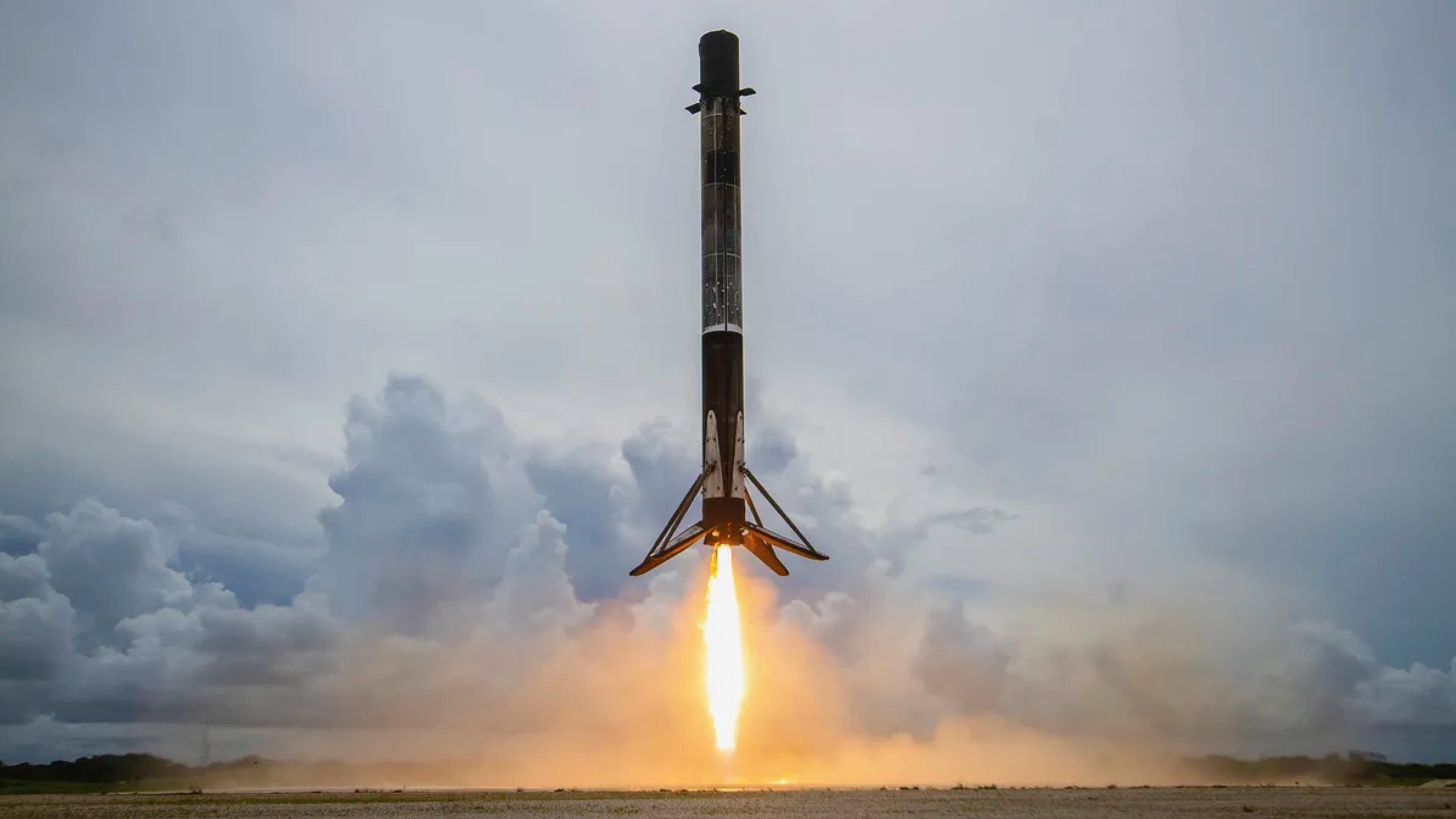
The Falcon 9 rocket landing team at SpaceX was honored with the first-ever Neil Armstrong Space Prize during a ceremony on September 15, 2023, held at the Cosmos Club in Washington, D.C. The award, created by Purdue University, recognizes the team’s achievement in developing the innovative landing technology that has made the Falcon 9 rocket a leader in reusable space vehicles.
Read More
Purdue, which has a legacy of astronaut alumni, described the Falcon 9 Booster Landing Team’s contributions as transformative for space exploration, stating that their work in making rocket reuse practical at scale has altered the economics of spaceflight. Mark Lundstrom, Dean of the College of Engineering at Purdue, articulated that the team embodies the spirit of exploration characterized by Neil Armstrong.
The inaugural awardees are five key SpaceX employees:
- Lars Blackmore, Senior Principal Mars Landing Engineer
- Shana Diez, Senior Director of Starship Reliability
- Jon Edwards, Senior Vice President of Falcon & Dragon Projects
- Yoshiaki Kuwata, Principal Guidance, Navigation and Control Engineer
- Eduardo Velazquez, Director of Crew Starship Engineering
The Falcon 9, which debuted in June 2010, was originally designed with reusability in mind. However, the technology took years to develop. Kuwata, who joined SpaceX in 2012, noted that early calculations made the goal seem straightforward, but the actual implementation revealed numerous complexities that delayed progress.
The first successful landing occurred on December 21, 2015, marking a milestone when the Falcon 9’s first stage returned to Earth after launching satellites. Subsequent achievements included the rocket’s first successful landing on a drone ship in April 2016. Since then, SpaceX has successfully landed more than 650 boosters during orbital missions, establishing the Falcon 9’s dominance in the space launch market.
Looking to the future, SpaceX plans to transition from the Falcon 9 to its fully reusable Starship, which is under development for future lunar and Martian missions. Starship has completed 13 suborbital test flights, with the Super Heavy first stage successfully recovered multiple times. However, developing reusability for Starship's upper stage poses additional challenges.
Kuwata expressed confidence in their approach, noting that while simulations indicate potential success, practical tests will be crucial to achieving reliable landings. Velazquez added that embracing the iterative process is key to advancing their mission of establishing a sustainable space economy.