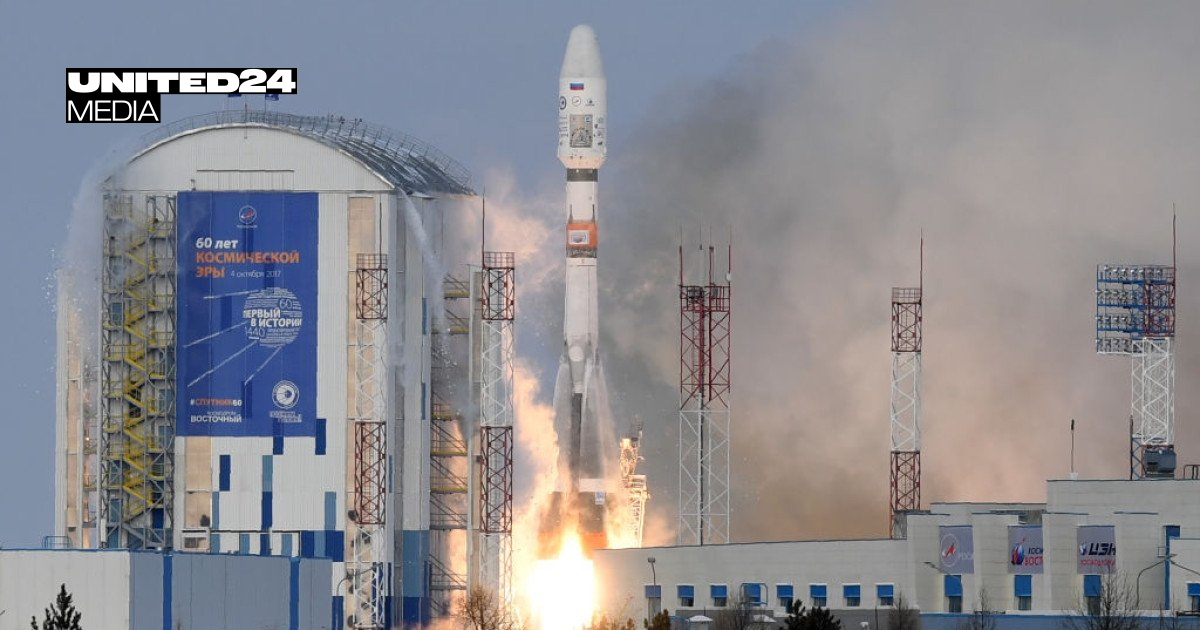
On September 17, Russia launched a Soyuz-2.1b carrier rocket from the Plesetsk Cosmodrome in the Arkhangelsk region, as reported by defense outlet Militarnyi on September 18, citing the Russian Ministry of Defense. The Ministry announced that stable telemetry was established and that onboard systems are functioning normally. However, officials did not disclose the name, quantity, technical specifications, or purpose of the satellite.
Read More
Militarnyi reported, referencing tracking platform Next Spaceflight, that the mission utilized a Fregat-M upper stage. The payload is officially categorized as a classified military satellite or a component of the “Kosmos” series. Analysts suggest this launch may be associated with the expansion of Russia's low-Earth orbit communications system, known as “Rassvet.”
The “Rassvet” network, developed by Bureau 1440, began deployment in March 2026, using the same Soyuz-2.1b rocket and launch site to place 16 satellites in orbit. A second batch of satellites was launched in July. According to Ukraine’s Main Intelligence Directorate (HUR), Moscow aims to expand the constellation to 292 satellites by the end of 2027 and up to 924 by 2035.
Given the mission's secrecy, the payload could also include military hardware, continuing a trend of covert space missions this year. On February 5, a previous Soyuz-2.1b launch delivered nine objects into orbit, later identified as “Kosmos-2600” through “Kosmos-2608,” which exhibited trajectories suggesting reconnaissance capabilities, according to Militarnyi.
Additionally, in April, the US Space Force tracked three more Russian military satellites that were placed into polar orbits. The Soyuz-2 rocket family is produced at the Progress Rocket Space Centre in Samara, a facility previously struck by Ukrainian FP-5 Flamingo cruise missiles. Satellite imagery later revealed significant damage to Workshop 106A, where critical components for the Soyuz-2 rockets are assembled.