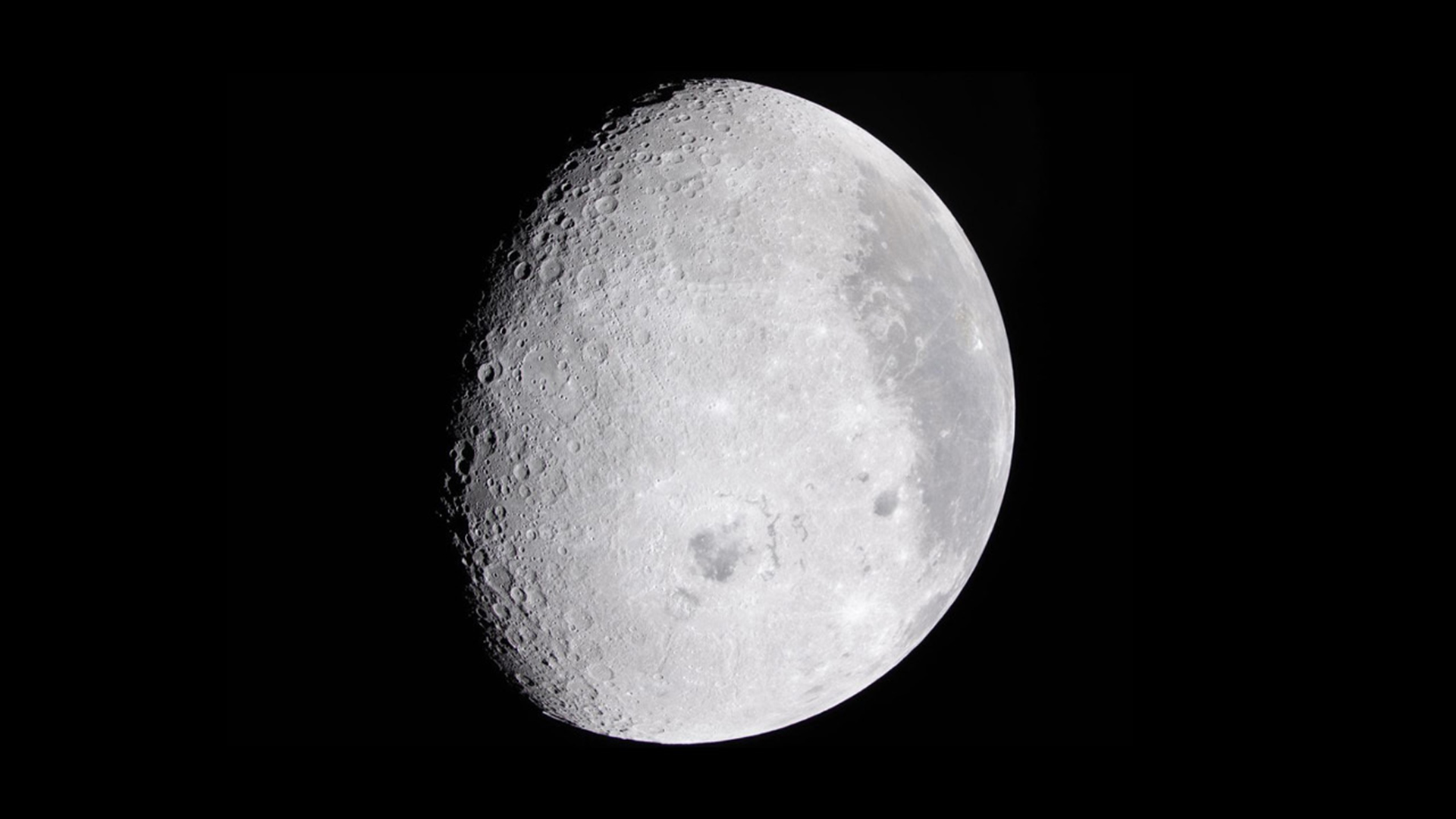
NASA and IBM have announced the open-source release of the NASA-IBM Lunar Foundation Model, a significant development aimed at facilitating scientific exploration of the Moon. This model, made available on September 10, 2026, is designed to transform decades of lunar observational data into actionable insights, helping researchers identify patterns at a scale previously unattainable.
Read More
The Lunar Foundation Model has demonstrated up to a 22% improvement over existing methods in identifying crucial lunar geographic features, such as potential ice deposits, craters, and volcanic formations. These enhancements are essential for supporting a sustainable human presence on the Moon.
The Moon's surface is dynamic, characterized by craters, ice distributions, and volcanic activity, generating petabytes of observational data over many years. Traditionally, scientists faced challenges sifting through this information due to the extensive time required or the limitations of low-resolution, task-specific models. The newly released model offers a more efficient solution by uncovering hidden relationships among diverse types and resolutions of lunar data.
Key applications of the NASA-IBM Lunar Foundation Model include:
1. **Potential Lunar Ice Deposits**: The model is valuable in predicting the presence of lunar ice in shadowed regions, which are difficult to observe but essential for future lunar bases and missions to Mars. A technical paper indicates that the model has achieved up to 22% lower error rates compared to the SwinV2-B model when identifying areas likely to contain lunar ice.
2. **Volcanic History**: Researchers can use the model to analyze lunar volcanic features, known as Irregular Mare Patches, which are critical for understanding lunar volcanic activity and planning future operations. It has been shown to improve the mapping of these features, achieving a 3% increase in accuracy over the SwinV2-B model, all while reducing fine-tuning costs.
3. **Craters Detection**: The model assists in identifying and classifying lunar craters, which provide vital information about the Moon’s geological history and potential landing sites for missions. It rivals state-of-the-art models like SwinV2-B, demonstrating improved efficiency and comparable accuracy using less training data.
Kevin Murphy, Chief Science Data Officer at NASA, emphasized the importance of making large-scale data more accessible to scientists. According to Juan Bernabe-Moreno, Director of IBM Research Europe, the model enables researchers to connect observations across various instruments and discern patterns that might otherwise remain hidden.
Despite the vast amounts of lunar data available, there has been no unified dataset suitable for modern machine learning applications. The collaboration between IBM and NASA has resulted in the creation of an open-source lunar dataset, providing a comprehensive framework ready for machine learning use. This dataset aggregates over 30 spatially-aligned layers from nine instruments across four missions, incorporating data from NASA’s Lunar Reconnaissance Orbiter and GRAIL missions, as well as contributions from the Japanese Aerospace Exploration Agency’s SELENE/Kaguya.
This initiative is part of a broader collaboration between IBM and NASA to make valuable scientific data openly available, fostering advancements in lunar exploration. The Lunar Foundation Model joins the Prithvi family of open foundation models, which includes applications in geospatial, weather, and heliophysics research, and it aims to accelerate discoveries across various scientific domains.
IBM continues to support clients worldwide by leveraging insights from data through advanced hybrid cloud and AI technologies.