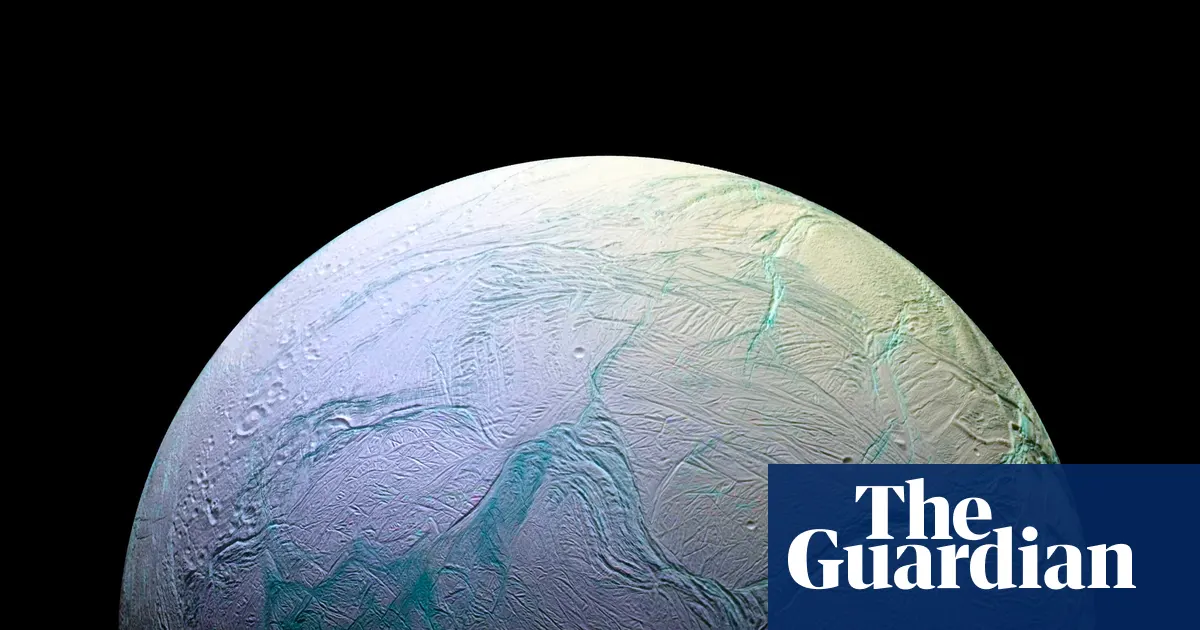
Research has shown that microorganisms discovered near deep-sea hydrothermal vents in Japan can endure the harsh conditions believed to exist in the ocean beneath Enceladus, one of Saturn's moons. These findings bolster the case for the potential habitability of Enceladus, particularly in light of the water plumes observed erupting from its surface.
Read More
The microbes, known as methanogens, survive by converting hydrogen and carbon dioxide into methane. In experiments, these organisms thrived in a brine solution that replicated the saltwater ocean expected beneath Enceladus’s icy crust. William Orsi, a geomicrobiology professor at Ludwig-Maximilian University in Munich, emphasized that based on current definitions of life, these organisms could likely survive in Enceladus’ environment.
Enceladus, a 300-mile-wide ice moon, had been previously overlooked until the arrival of robotic spacecraft allowed for a closer examination. NASA’s Cassini probe and the James Webb Space Telescope have uncovered massive plumes of water vapor and ice grains, along with indications of a substantial saltwater ocean beneath the icy surface. This ocean is believed to be warmed by hydrothermal vents on the seafloor.
In their experiments, Orsi and his team created a laboratory simulation of Enceladus' ocean by mixing water, salts, carbonates, and powdered rock. This not only produced an extremely alkaline environment but also facilitated chemical reactions mimicking natural processes occurring on the moon. Remarkably, the methanogens not only survived in conditions with a pH level of 11 but also adapted to lower carbon dioxide levels.
David Rothery, a planetary geosciences professor at the Open University, pointed out that demonstrating the feasibility of methanogenesis in the simulated ocean supports the idea of microbial life existing on Enceladus. However, Orsi cautioned that any life forms that may have evolved on the moon could differ significantly from terrestrial life, raising questions about their long-term survival.
A related study discussed the fragmentation of ice grains in Enceladus's plumes, suggesting that these particles might concentrate signs of microbial life, which could facilitate detection by future missions.
The European Space Agency has proposed the L4 mission, aiming to combine a Saturn orbiter with an Enceladus lander to investigate potential biosignatures in the moon's plumes. This mission, slated for launch around 2042, would not arrive at Saturn until the 2050s. Dr. Rachael Hamp from the Open University expressed enthusiasm for the new research, as it enhances the prospects for understanding the habitability of Enceladus.