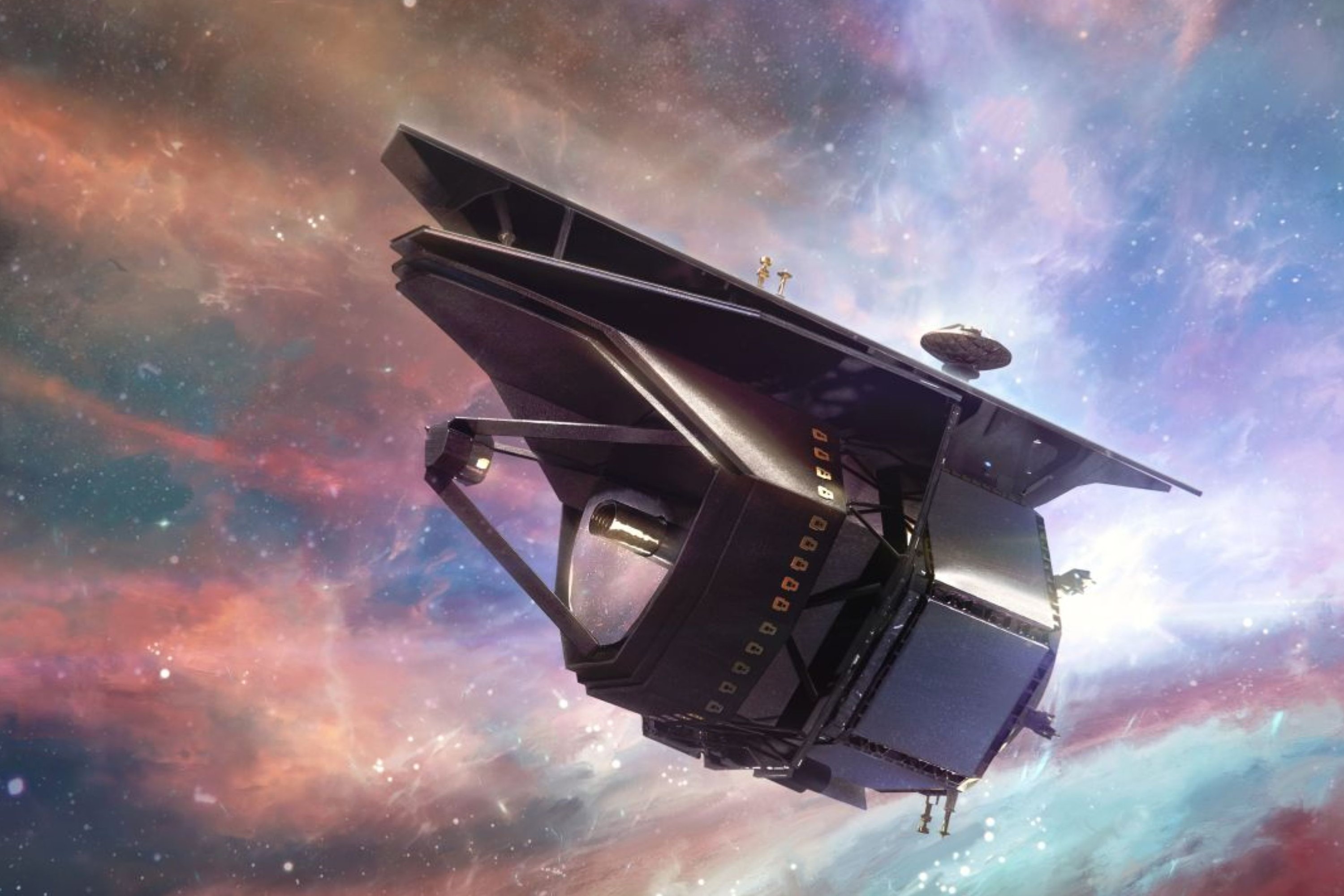
NASA has chosen the Probe Mission for Far-Infrared Astrophysics (PRIMA) to investigate the history and evolution of the Universe. Researchers from Imperial College London's Department of Physics are part of an international team involved in this mission, which aims to study key stages in the formation of planets, galaxies, and black holes.
Read More
PRIMA will utilize a 1.8-meter far-infrared space telescope to conduct deep and sensitive surveys of regions in the Universe that conventional observatories cannot access. By observing at wavelengths beyond human vision, PRIMA is set to uncover areas obscured by cosmic dust, addressing critical questions about cosmic history, including how planets form beyond our Solar System and how galaxies and their supermassive black holes developed.
A significant objective of PRIMA is to explore regions hidden from traditional telescopes due to the absorption of visible light by cosmic dust. This capability will allow astronomers to analyze the dust directly and study the underlying astronomical processes.
Dr. Dave Clements, an Associate Professor of Astrophysics at Imperial, stated, "About half of the energy generation - so half of the action - in the universe is hidden by dust. Far-IR telescopes can see that dust and penetrate through it to observe what is concealed inside. PRIMA will enable us to examine vital stages in planet formation, the early evolution of galaxies, and the origins of dust in the first galaxies."
In addition to its core science goals, PRIMA is expected to facilitate a wide range of future discoveries as a general-purpose observatory. The selection of PRIMA highlights a significant milestone for the collaboration among researchers from the United States, Europe, and Asia. Supported by the UK Space Agency, the UK team for PRIMA includes experts from the University of Sussex, Cardiff University, STFC's RAL Space, and Celtic Terahertz Technologies.
Imperial's role focuses on developing data reduction and analysis tools, aiding scientists in processing and interpreting the substantial data that PRIMA will gather. This mission continues Imperial's longstanding involvement in far-infrared astronomy, with contributions to pioneering missions over the past four decades, including IRAS, ISO, Spitzer, AKARI, and Herschel.
PRIMA will mark the first dedicated mission to observe the infrared Universe in over a decade, ushering in a new era for far-infrared astronomy. Professor Clements remarked, "PRIMA fills a vital gap in our coverage of the electromagnetic spectrum between JWST (the James Webb Space Telescope) and ALMA (the Atacama Large Millimetre/Submillimetre Array)."
The mission is expected to launch in the early 2030s with a planned duration of five years, providing unprecedented insight into the dust-obscured cosmos.