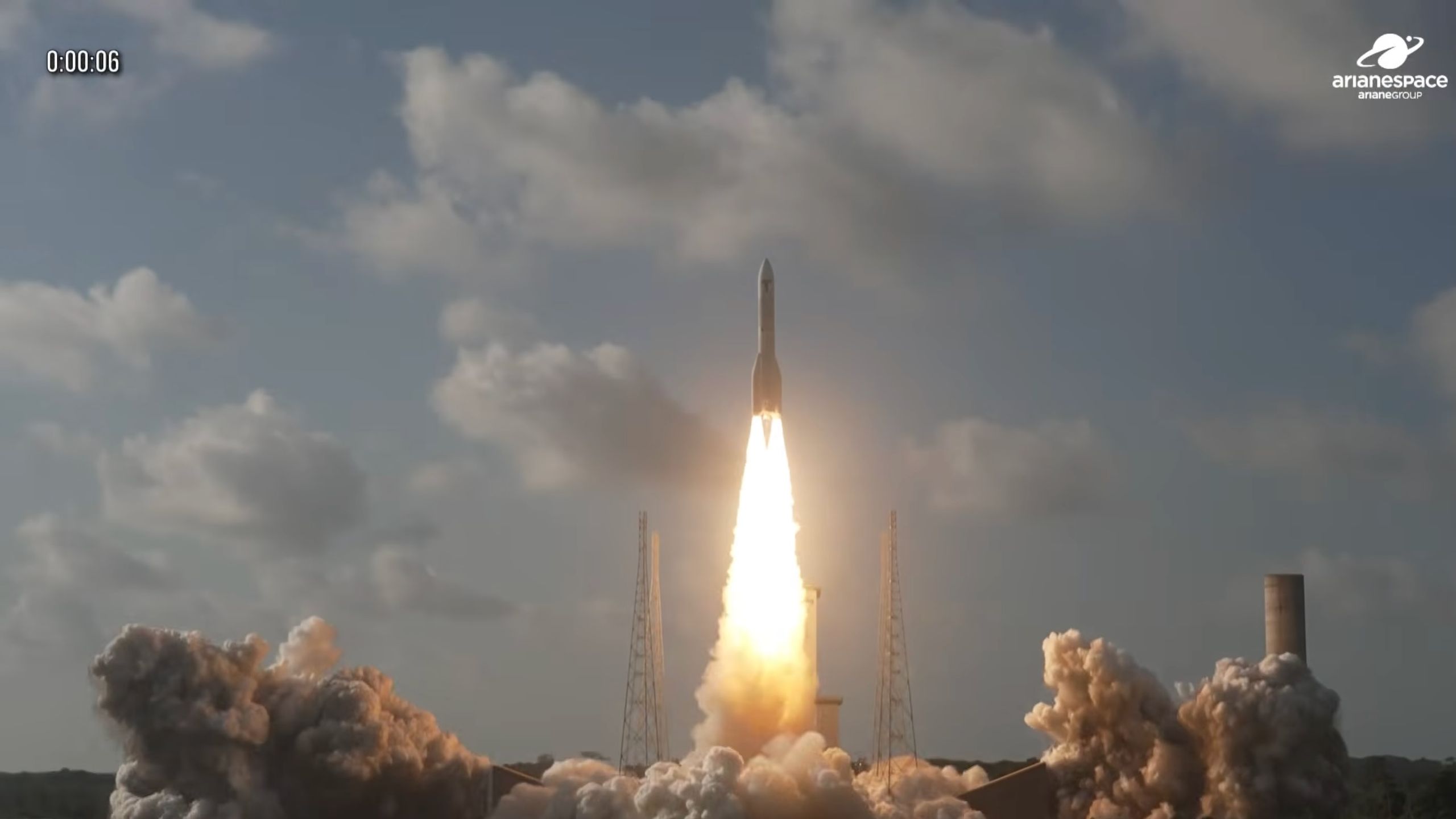
The Ariane 6 rocket successfully launched the MTG-I2 weather satellite on August 27, 2026, at 4:10 p.m. EDT (2010 GMT) from Europe's Spaceport in Kourou, French Guiana. The launch occurred at the start of a 2.5-hour window and proceeded without issues, with the MTG-I2 being deployed into geostationary transfer orbit 36 minutes after liftoff.
Read More
Weighing 8,400 pounds (3,800 kilograms), MTG-I2 is the second satellite in the Meteosat Third Generation network. This mission completes a three-spacecraft constellation positioned in geostationary orbit, 22,236 miles (35,786 kilometers) above Earth. The other satellites in this network, MTG-I1 and MTS-S1, were launched in December 2022 and July 2025, respectively. MTG-I1 is an imaging satellite, while MTS-S1 serves as a "sounder" with an infrared instrument for atmospheric analysis.
Operated by the European Organisation for the Exploitation of Meteorological Satellites (EUMETSAT), the MTG satellites are designed to enhance weather forecasting and climate monitoring. Arianespace described this system as a new generation of geostationary satellites that enable the early detection of severe weather and other environmental phenomena. The data from the MTG system will assist in avoiding storms, issuing flood alerts, and improving fire and fog monitoring.
This launch marks the ninth flight of the Ariane 6, which has a maximum geostationary transfer orbit payload capacity of 12.7 tons (11.5 metric tons). In comparison, SpaceX's Falcon 9 can carry 9.15 tons (8.3 metric tons) to orbit. The Ariane 6 rocket debuted in July 2024, with its previous mission in June successfully delivering 36 of Amazon's broadband satellites to low Earth orbit.