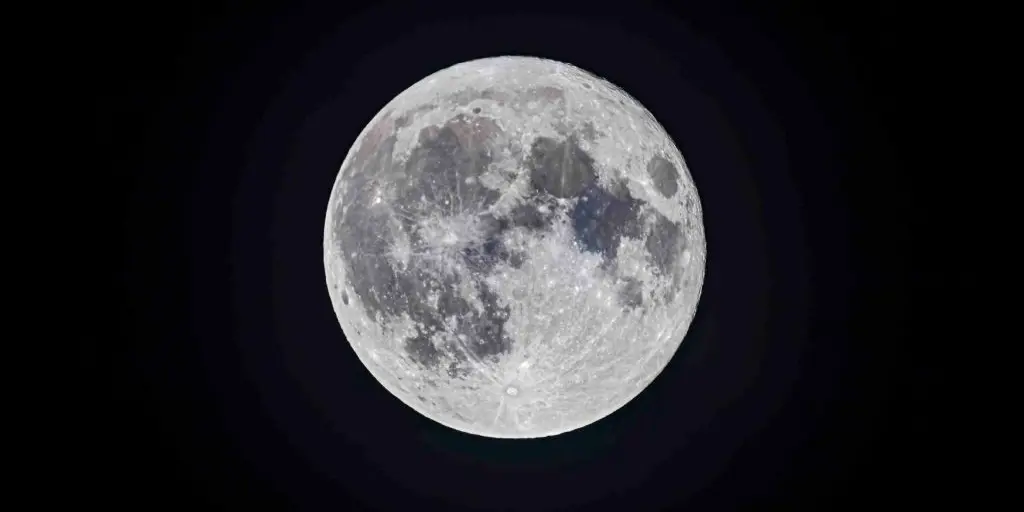
NASA has provided new insights into its Moon Base strategy, which aims to establish a lasting human presence near the Moon's south pole. The agency detailed plans that include new lunar rover contracts, upcoming cargo missions, and infrastructure projects designed to sustain operations on the lunar surface. This initiative marks a significant transition from temporary lunar visits to establishing permanent systems for ongoing exploration.
Read More
A key element of this strategy involves the use of artificial intelligence (AI) to help explore and analyze the Moon's surface. NASA announced that a new AI model has matched or surpassed previous methodologies, enhancing their ability to map and assess the Moon's rugged terrain. The AI tools will focus on understanding the Moon's geology and planning future scientific research.
The AI models utilized for lunar exploration are pre-trained on extensive unlabeled datasets, allowing them to generalize across various scientific domains efficiently. NASA stated that these foundation models facilitate rapid fine-tuning, making them versatile for scientific research across different areas.
Using 17 years of data from the Lunar Reconnaissance Orbiter (LRO), scientists were able to gather more information than all other NASA planetary missions combined, producing seamless, high-resolution mosaics of the Moon. The pre-trained AI model enables scientists to adapt its capabilities for several research tasks, including the mapping of craters and evaluating potential sites for ice deposits on the lunar surface.
Researchers are particularly interested in the Moon’s permanently shadowed regions, where temperatures are low enough to preserve ice for billions of years. This capability could inform human applications for utilizing lunar resources during future space missions.
Additionally, the AI model enhances the speed of crater identification and analysis of distinctive volcanic features, contributing to the understanding of the Moon's thermal history. Following initial tests, results indicate that the AI model's performance meets or exceeds that of earlier methods. Looking ahead, NASA and IBM plan to implement similar AI techniques in future studies of the Moon and beyond.