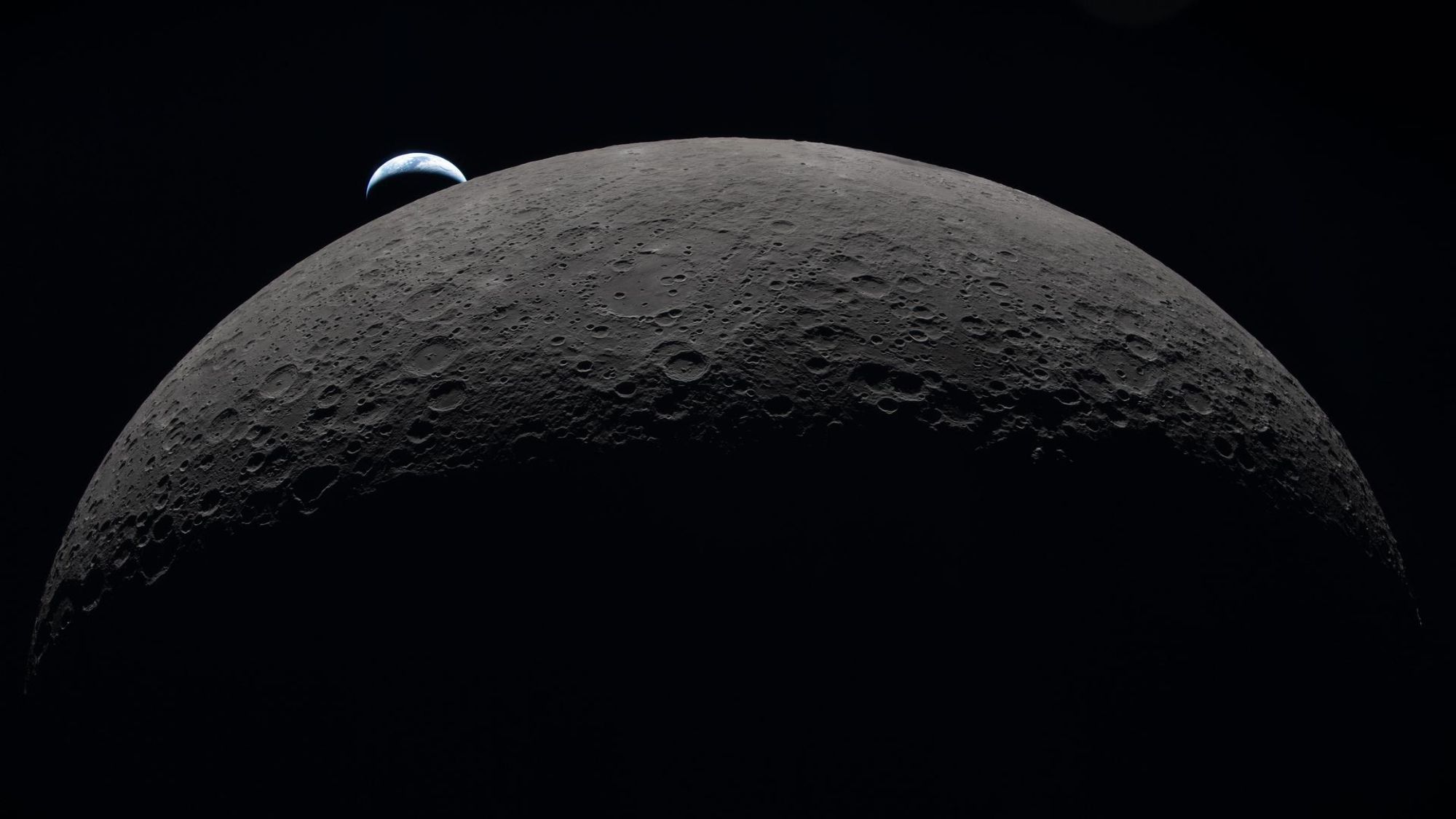
A recent proposal from the SETI Institute suggests that microscopic signs of alien technology may be hidden in lunar dust. This concept, described as searching for "microscopic technosignatures," could uncover tiny engineered particles that originated from interstellar space and settled on the moon.
Read More
The institute highlighted this idea, which is based on a paper published on arXiv in August and currently under peer review for the International Journal of Astrobiology. The research is led by Lewis Pinault, an Affiliate Scientist at SETI. He stated, "The moon has been quietly accumulating material from space for billions of years, much of it likely billions of years older than the moon itself. We're asking whether that ancient collection might contain microscopic traces of technologies that existed long before humans ever looked up at the sky."
While the study reportedly shows no current evidence of extraterrestrial technology, it indicates that the quest for technosignatures is now scientifically viable. The upcoming NASA-led Artemis program and China’s Chang'e robotic missions are expected to enable sample returns from the moon, enhancing the feasibility of the search—China plans to send taikonauts to the moon by 2030.
Traditionally known for detecting artificial radio signals from extraterrestrial sources, SETI is now exploring the potential remnants of long-gone alien civilizations preserved as durable particles. The study looks at how these particles might travel between stars, persist over time, embed into the lunar surface, and be analyzed using advanced techniques like AI-assisted imaging and microscopy.
The moon's environment makes it particularly suitable for this research, as it has slow geological changes, without the flow of water or a significant atmosphere, allowing it to collect dust for around four billion years. This potentially creates an archive of interstellar and solar system material.
SETI argues that if advanced civilizations produce durable debris, even a small fraction of those particles could end up in the lunar regolith. The researchers aim to study approximately 35 cubic feet (one cubic meter) of lunar regolith, roughly the size of a refrigerator, employing various methods to explore the presence of artificial materials.
Even if initial findings do not reveal technosignatures, the research could contribute to broader investigations of extraterrestrial artifacts and solar system science. Bill Diamond, president and CEO of SETI Institute, expressed excitement about this innovative approach in searching for evidence of life and intelligence beyond our solar system.