Simran Panda, a senior at UNC-Chapel Hill, gazes out from her lab in an old airplane hangar near the former Horace Williams Airport. Approximately 1.5 miles from the university's main campus, this site once played a significant role in the training of some of the nation's most famous astronauts.
Read More
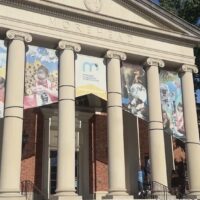
From the late 1950s to the mid-1970s, the Morehead Planetarium and Science Center became known for its unique combination of astronaut training and chocolate chip cookies. Under the direction of Tony Jenzano, the planetarium offered a welcoming atmosphere for astronauts seeking both training and a break, affectionately termed “cookie time.” This tradition stemmed from the well-known cookies baked by Jenzano’s wife, Myrtle.
Chapel Hill's strategic location near key NASA facilities, such as the Kennedy Space Center and Johnson Space Center, made it an ideal training ground. Morehead, which opened in 1949 as the first planetarium in the South and the first on a college campus, boasted advanced technology beneficial to early astronauts. Officials from Langley Research Center enlisted Jenzano for astronaut training due to his experience with naval survival training and celestial navigation.
Michael Neece, a local historian, notes that NASA recognized Morehead as an advantageous training site because of its skilled astronomers, top-notch equipment, and a low-profile community.
Over the years, 62 astronauts trained at Morehead, including 11 of the 12 men who walked on the moon, such as Neil Armstrong, Buzz Aldrin, and Alan Shepard. Crews from notable missions including Mercury, Gemini, Apollo, and Skylab utilized the planetarium to prepare for potential failure of onboard navigational systems, emphasizing the importance of manual navigation amidst the stars.
Nick Eakes, a science education specialist at Morehead, explained that astronauts required navigation skills akin to those used by ocean navigators for centuries. The planetarium's dome served as a simulated night sky, with stars projected and manipulated, allowing astronauts to familiarize themselves with their celestial surroundings.
The training sessions were critical. Gordon Cooper achieved one of the most precise manual splashdowns in history after losing his spacecraft's stabilization system, relying on star positions he had memorized during his training. James Lovell, Apollo 13's mission commander, shared in a letter to Jenzano that the training remained valuable even years later as he taught Tom Hanks about navigational stars for the movie portrayal of the mission.
Karsen Kitchen, a recent graduate, reflected on her experience working at Morehead and the influence of its history on her desire to venture into space. She made headlines in August 2024 as the youngest woman to cross the Kármán line during a Blue Origin flight, further connecting contemporary aspirations to the legacy of astronaut training at Morehead.
Panda, who dreams of traveling to space herself, now co-leads the Carolina Astronomy Association, founded by Kitchen. She finds inspiration in the history of Morehead and its connection to the astronauts that once trained there, noting the importance of recognizing how space exploration ties everyone together. Panda believes that while many view space as distant and unapproachable, it is essential to understand our connection to the universe.