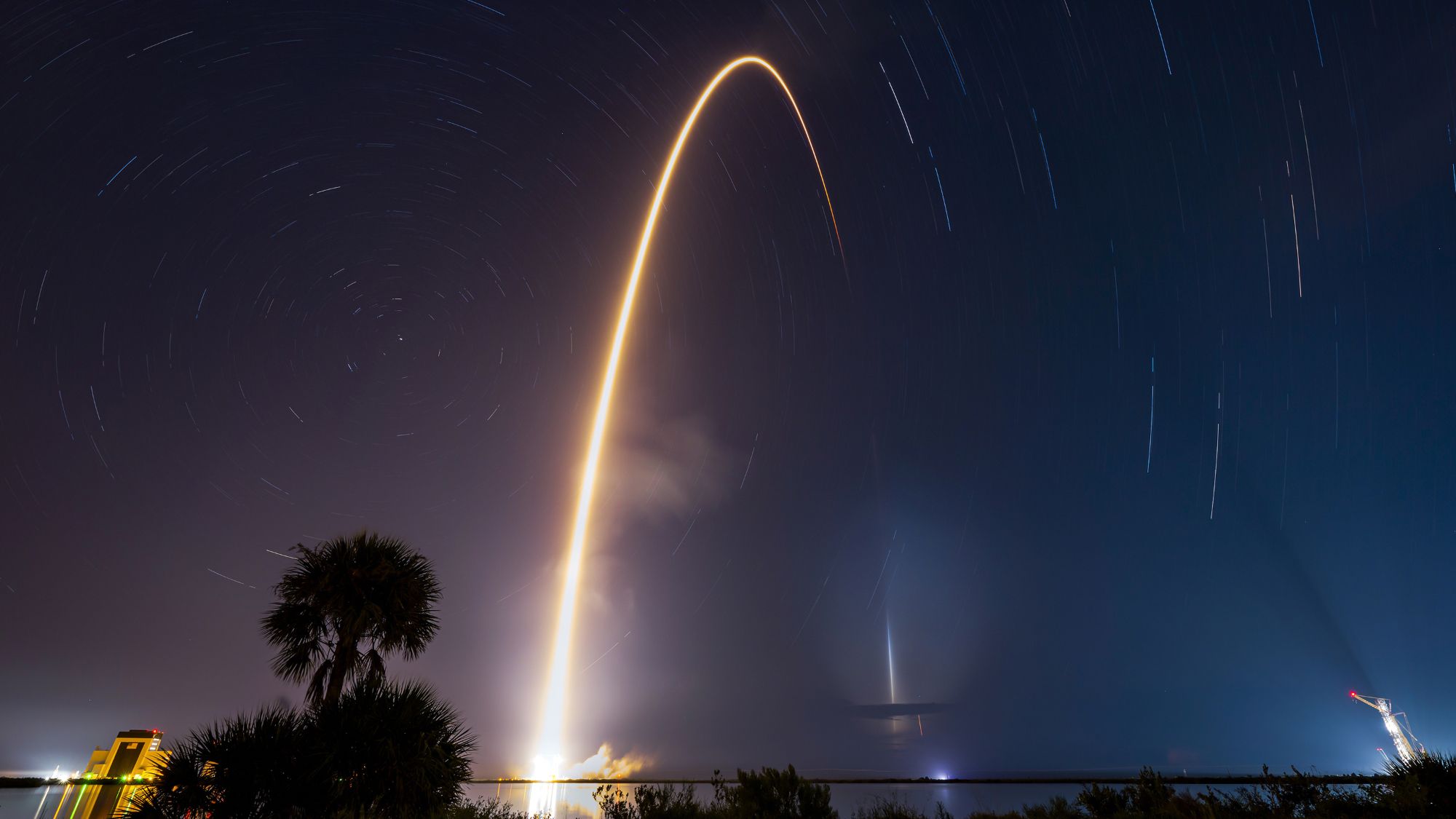
On August 25, 2026, SpaceX successfully launched its 100th Falcon 9 rocket from Cape Canaveral Space Force Station in Florida at 5:33 a.m. EDT, carrying 29 Starlink internet satellites. This mission marked a record-breaking 37th flight of the Falcon 9's first stage booster, designated B1067.
Read More
The Falcon 9 rocket continues to be the most active rocket currently in operation, having completed 165 missions in the previous year, outpacing all other orbital rockets combined. Each of those missions was fully successful, underscoring the effectiveness of Falcon 9's extensive first-stage reuse, which enhances cost efficiency compared to its competitors.
In recent weeks, two Chinese rockets have successfully performed landings during orbital missions, yet neither has achieved a second flight. In contrast, SpaceX has six Falcon 9 boosters that have flown at least 30 times, with B1067 leading the group at 36 flights.
Elon Musk, SpaceX's founder and CEO, has indicated that future launches will further capitalize on reuse, particularly with the intended next-generation Starship, which aims to be fully and rapidly reusable, capable of multiple daily flights.
After its launch, the B1067 booster returned to Earth, successfully landing approximately 8.5 minutes post-liftoff on the drone ship "A Shortfall of Gravitas" stationed in the Atlantic Ocean. Meanwhile, the rocket's upper stage completed its mission by deploying the 29 Starlink satellites into low Earth orbit 61.5 minutes after takeoff.
This launch represented the 77th mission of the year focused on expanding the Starlink constellation, which has grown to over 11,000 operational satellites. In addition to the Falcon 9 missions, SpaceX has also initiated one Falcon Heavy mission and two suborbital Starship test flights this year, with plans for Starship’s first orbital attempt expected in early to mid-September.