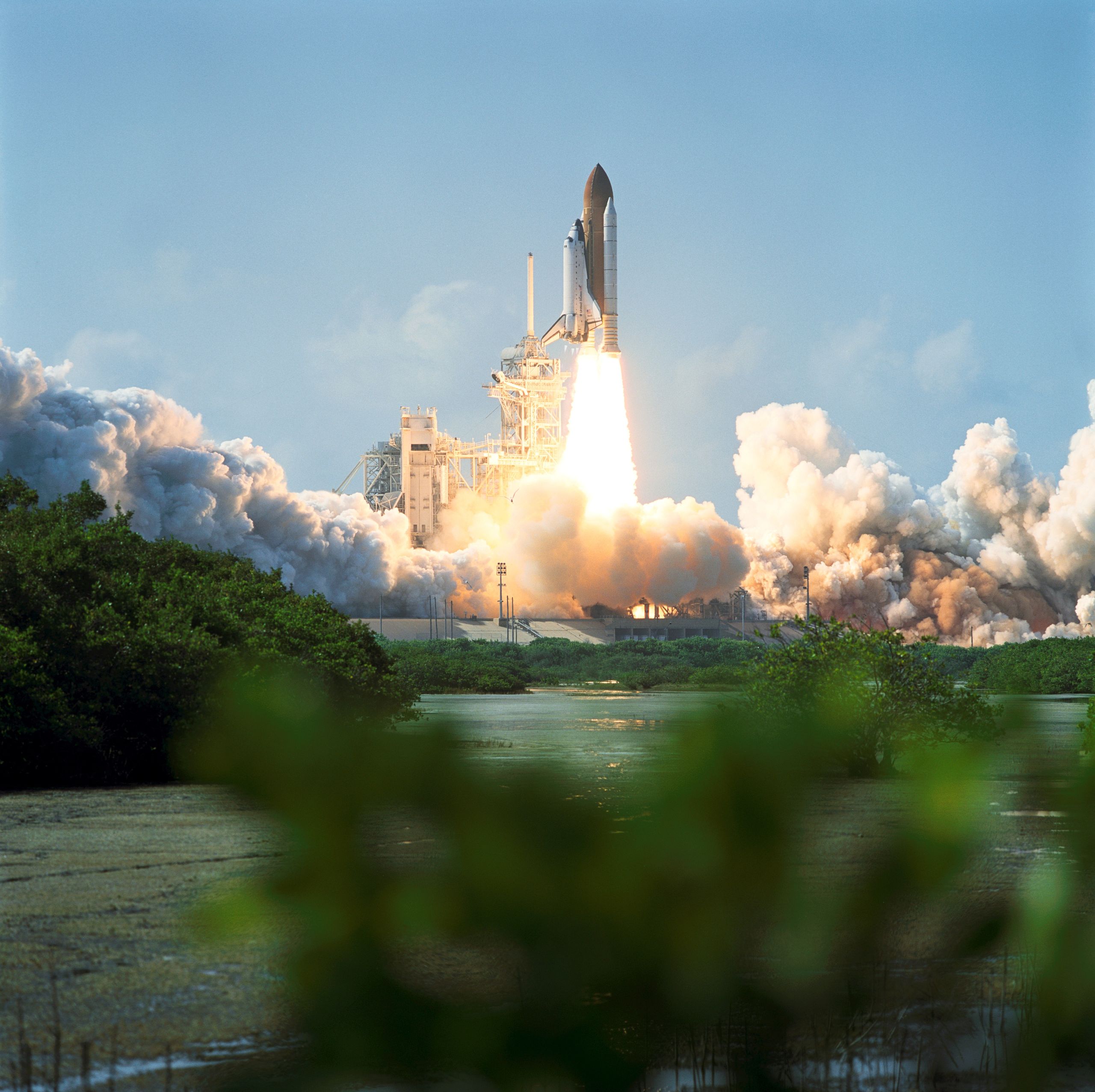
On October 7, 2002, NASA's space shuttle Atlantis launched from Kennedy Space Center on mission STS-112. This mission delivered the Starboard 1 (S1) truss segment to the International Space Station (ISS), a critical component of the station's structure that supports the thermal control system. During the launch, a piece of insulating foam broke off the external tank and struck the bottom of the rocket booster, creating a significant dent. Fortunately, this did not affect the STS-112 mission, although a similar incident contributed to the Columbia shuttle disaster three months later. Following this, NASA redesigned the shuttle to address the foam issue.
Read More
The 11-day STS-112 mission was essential in the construction of the ISS, as it not only delivered the 28,000-pound S1 truss, but also provided important equipment for astronauts conducting spacewalks outside the station. The S1 truss, built by Boeing, features a large ammonia-cooled radiator crucial for regulating the station's temperature and is approximately 45 feet (13.7 meters) long. It is primarily made of aluminum and contains power and cooling lines connecting different truss segments.
Astronaut Jeffrey Ashby commanded the mission, with Pamela Melroy serving as pilot. The crew included mission specialists Sandy Magnus, David Wolf, Piers Sellers, and Russian cosmonaut Fyodor Yurchikhin. During the mission, the astronauts completed three spacewalks to install the S1 truss, connect its radiator plumbing, and attach a Crew Equipment Translation Aid (CETA) cart, which facilitates gear movement for future spacewalks. Additionally, the mission transported about 1,800 pounds of cargo to the ISS and returned a similar amount back to Earth.