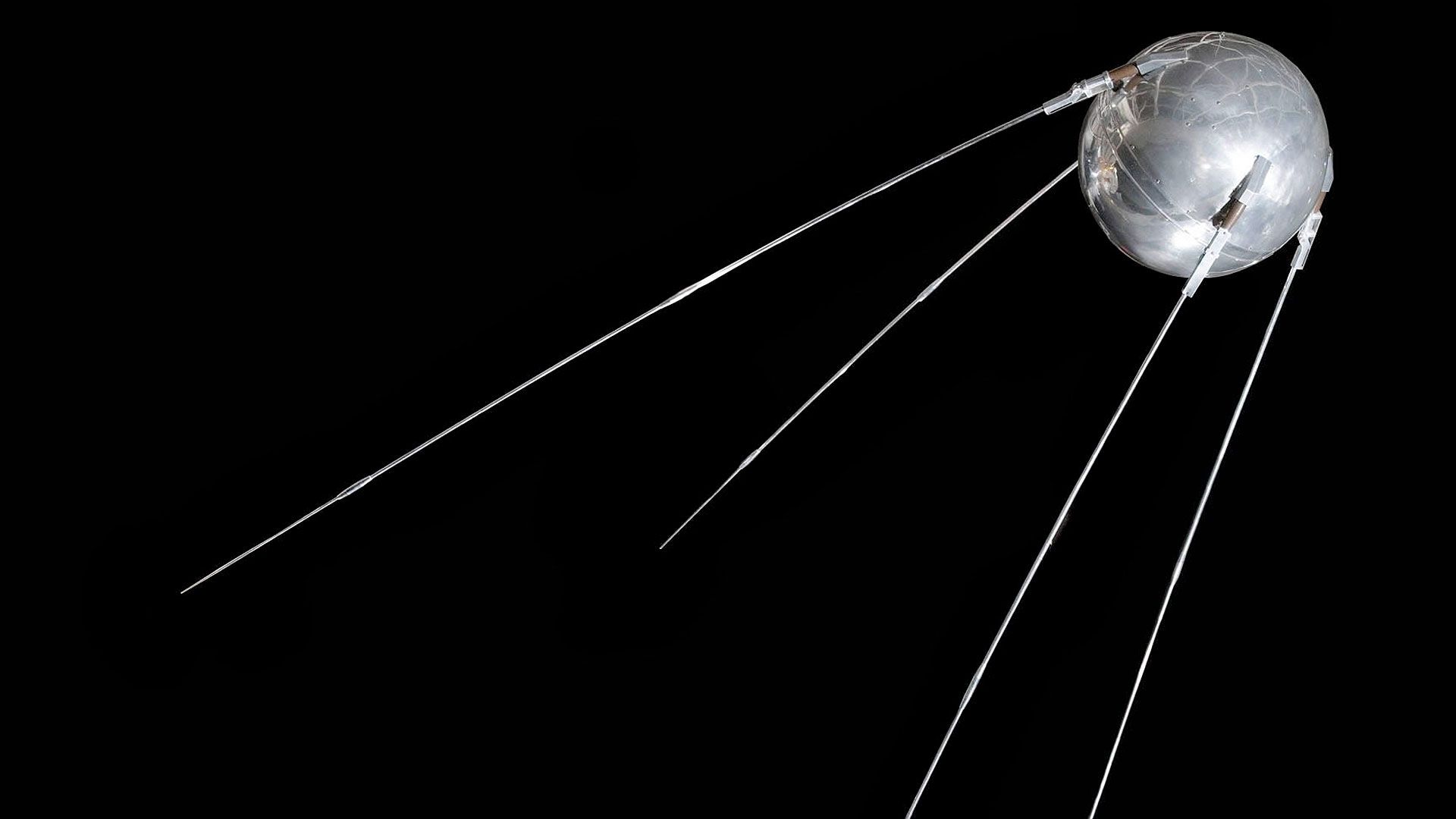
On October 4, 1957, the Soviet Union launched Sputnik 1, the first artificial satellite, initiating the Space Race. Sputnik 1 was a metal sphere approximately 2 feet (58 cm) in diameter, equipped with four long radio antennas that transmitted beeping signals audible even to amateur radio operators. This event generated widespread anxiety in the United States, commonly referred to as the "Sputnik crisis."
Read More
The satellite orbited Earth for 21 days before burning up in the atmosphere. Weighing 184 pounds (about 84 kg) and comparable in size to a beach ball, Sputnik 1 was notable for its weight, exceeding the 3.5-pound payload that the United States intended to launch with the Vanguard rocket, which failed in December 1957. The launch raised concerns among U.S. officials regarding the potential military applications of Soviet rocket technology.
A month later, on November 3, the Soviet Union launched Sputnik 2, which carried the dog Laika into space as the first living creature in orbit. The first U.S. satellite, Explorer 1, was launched later, on January 31, 1958. The impact of Sputnik 1 reshaped the geopolitical landscape and ultimately led to the establishment of NASA and the Apollo 11 moon landing in 1969.