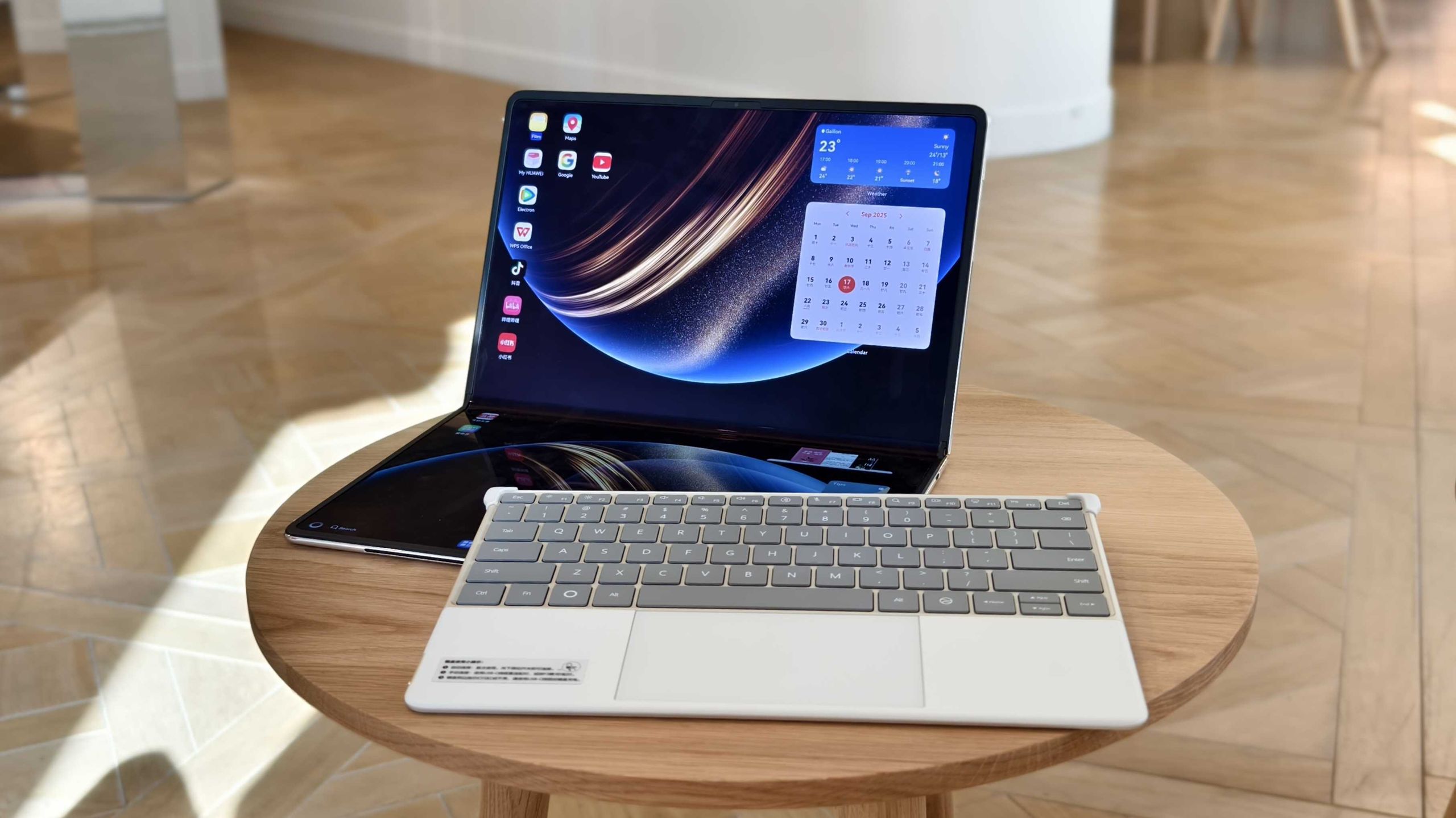
The recent introduction of the iPhone Duo has expanded the choices for U.S. smartphone users to seven folding models, including devices from Google, Motorola, and Samsung. In contrast, the number of foldable laptops produced remains significantly lower, with only a few options such as one each from Asus, Huawei, HP, and two from Lenovo.
Read More
Samsung's Galaxy Z Fold and Z Flip have established an annual upgrade cycle, whereas the market for folding laptops has been quiet. The latest foldable laptop, Lenovo's ThinkPad Fold 16 Gen 2, was released in November 2023, more than a year after its initial announcement.
Various challenges—including structural, technological, and economic factors—have hindered the mainstream adoption of foldable laptops. Asus's Zenbook 17 Fold OLED, for instance, launched at a hefty price of $3,500 in 2022, and the HP Spectre Foldable PC followed in 2023 with a price tag of $5,000, roughly 2.5 times that of a Galaxy Z Fold Ultra. As the costs of RAM and flash storage have significantly increased during the ongoing 'RAMpocalypse', it is questionable whether newer foldable laptops can justify their pricing.
Unlike foldable phones, which offer a noticeable increase in utility, the transition from a clamshell laptop to an unfolded one is less dramatic. For instance, the difference between a 13-inch laptop screen and a 17-inch version isn't as substantial when it comes to user experience as the comparison between the largest iPhones and an iPad mini, especially since Apple recently enhanced iPadOS.
Another challenge for foldable laptops is the practical aspects of their design. While foldable smartphones can serve everyday functions when folded by utilizing front displays, laptops require unfolding to utilize their screen space fully. This adds a layer of inconvenience; for example, the second-generation ThinkPad X1 Fold necessitates separating the Bluetooth keyboard from the device, which can be cumbersome.
Additionally, while early concepts of rollable laptops like Lenovo's designs appear promising by potentially allowing full use of screen area without needing the keyboard to be removed, these innovations remain in the prototype stage.
Overall, the dynamics favor the smartphone sector, suggesting that the next generation of laptops with bending displays will need a reevaluation of design and utility to compete effectively.