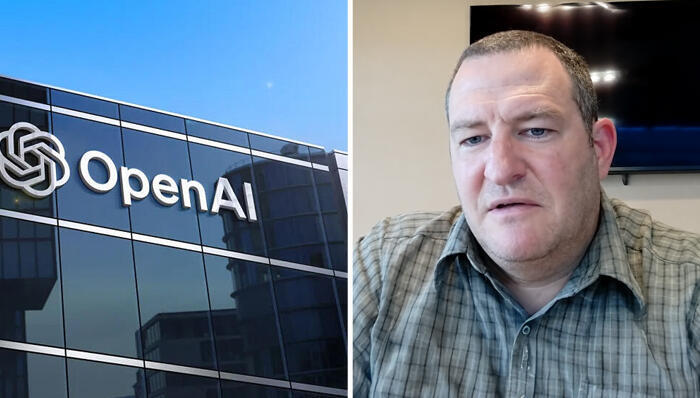
Ziv Attar, an Israeli entrepreneur known for developing camera technology, has sold his startup Glass Imaging to OpenAI for $300 million. Many iPhone users have unknowingly benefited from Attar’s innovations, including the smartphone camera's Portrait Mode, which he helped pioneer.
Read More
Originally from Afula, Attar studied optical engineering at the Technion and began his career at Rafael as a senior optics specialist. In 2007, he founded OpEra Optics, where he served as Chief Optical Designer, focusing on miniature camera technologies. In 2011, he co-founded LinX with Andrey Tovchigrechko, leveraging OpEra's intellectual property. LinX developed a compact mobile camera that combined multiple sensors and lenses to enhance image quality and reduce motion blur.
As CEO of LinX, Attar also contributed to the development of a dual-camera version of Portrait Mode, allowing users to keep the foreground in focus while blurring the background. This innovation ultimately became standard across the smartphone industry. In 2015, Apple acquired LinX for $25 million, which led to the integration of its technology into the iPhone 7 Plus's Portrait Mode, marking a significant advancement in smartphone photography.
After his time at Apple, Attar co-founded Glass Imaging with Dr. Tom Bishop in 2019, focusing on revolutionizing digital photography through artificial intelligence. Attar aimed to develop hardware changes that leverage AI capabilities, aiming to produce smaller, cheaper cameras without sacrificing image quality.
He noted that while AI had been used in smartphone cameras primarily for facial and object recognition, advancements in processing power allowed for the application of AI to full-resolution images. This progress has opened doors for innovative work in digital imaging at Glass Imaging.
By comprehensively characterizing camera optics and sensors, Attar's technology feeds terabytes of data into software that trains a neural network, capable of enhancing image quality while correcting imperfections. This approach suggests that high-quality imaging could be achieved even with less sophisticated hardware, aligning with OpenAI's interests in developing advanced AI-powered devices. The acquisition signifies potential advancements not just in photography but in enabling AI systems to interpret the physical world.