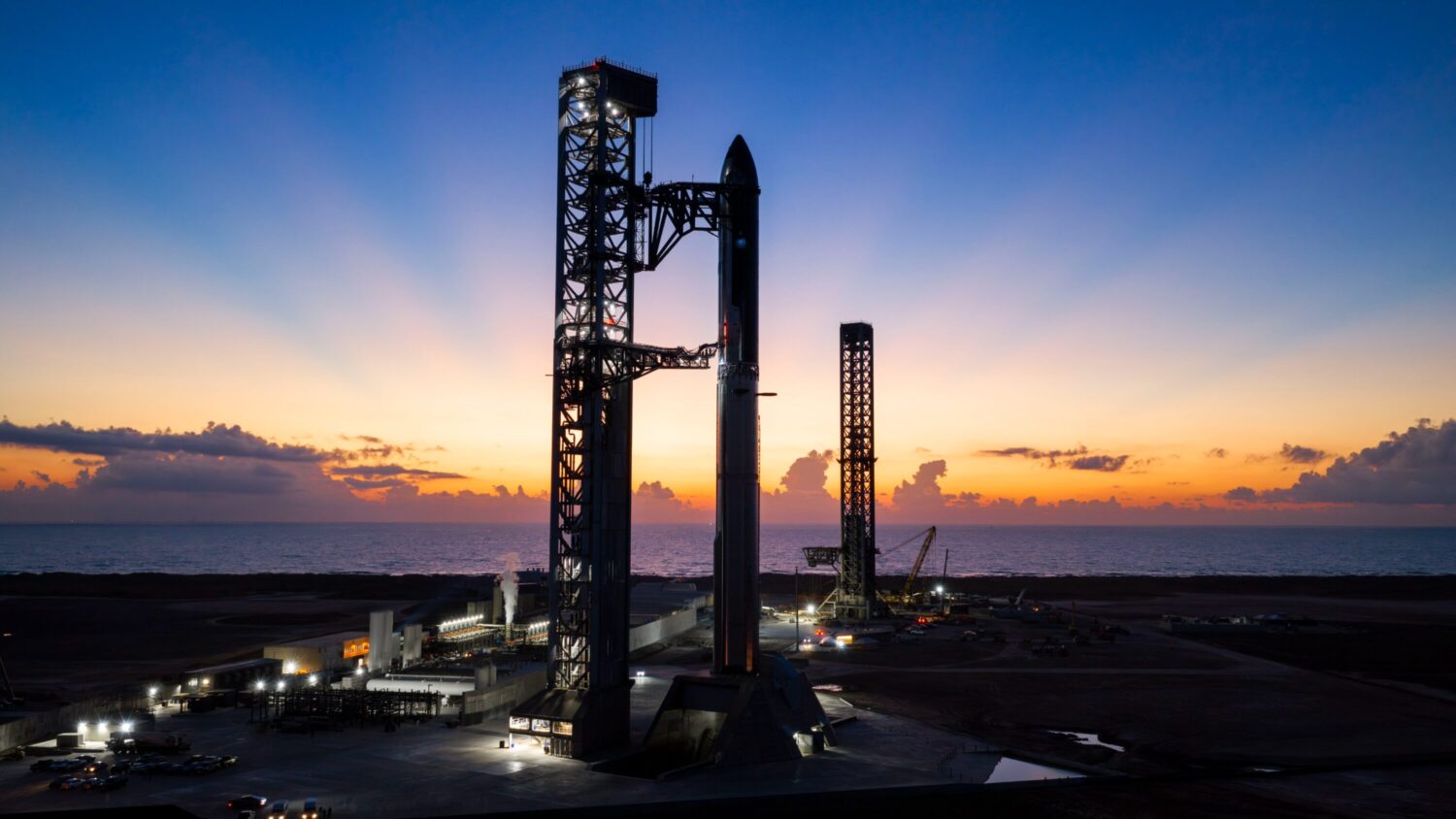
SpaceX plans to launch its Starship 14 as early as Monday, September 28, at 7:15 a.m. from Starbase in South Texas, near Brownsville. This mission marks a significant step, as it could be the first flight of the massive rocket into Earth's orbit, with potential implications for future space exploration.
Read More
The launch window will be open until approximately 8:30 a.m. Regulatory approval from the Federal Aviation Administration (FAA) is still pending. Recently, SpaceX conducted a successful rehearsal for the mission, which comes on the heels of the company's record-setting initial public offering that has significantly increased Elon Musk's wealth.
The flight will be livestreamed on SpaceX's X account and its official website.
Starship 14 is SpaceX's fully reusable super heavy-lift vehicle, the largest and most powerful rocket built to date. This mission is pivotal as it will fully deploy operational Starlink satellites into orbit, following earlier successful demonstrations. The rocket is expected to reach an altitude of about 170 miles and complete six orbits of the Earth over approximately 10 hours.
After launch, the upper stage of Starship 14 will detach from its super heavy booster, which is slated to land in the Gulf of Mexico. SpaceX has addressed previous issues that caused the booster to experience a hard landing in July. The upper stage will activate its engines approximately 30 minutes into the flight to enter orbit and deploy 26 Starlink satellites before returning to Earth.
Both stages of Starship 14 are designed for reuse, and a successful launch would have far-reaching benefits for SpaceX and the commercial space sector. Additionally, it will support NASA's upcoming Artemis missions. NASA has contracted SpaceX for a lunar landing system as part of its efforts to land astronauts on the moon for the first time in over 50 years, with an investment exceeding $4 billion amid some delays.
SpaceX's adaptation of Starship for crewed lunar missions is intended to contribute to the establishment of a U.S. Moon Base. Delays have reshaped the Artemis III mission plans, which now involve testing SpaceX's Starship and Blue Origin's Blue Moon landers in low Earth orbit. The Artemis IV mission is anticipated to utilize one of these landers, with a target date projected for early 2028.