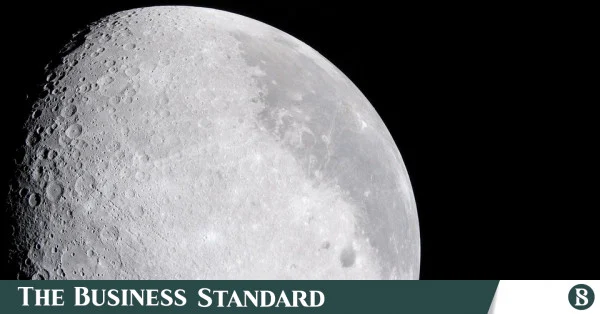
On September 6, 2023, President Donald Trump declared on Truth Social that "The Moon Is Ours" in a post that included an image of the lunar surface featuring an American flag. This statement, however, contradicts over fifty years of international law, specifically the Outer Space Treaty of 1967, which states that no country, including the US, can claim sovereignty over the Moon.
Read More
The Outer Space Treaty, established during the Cold War with American support, clearly indicates that outer space, including the Moon and other celestial bodies, is "not subject to national appropriation" through sovereignty or occupation. This means that actions such as planting a flag or building a base do not grant any country ownership over the territory.
Article I of the treaty emphasizes that exploration and use of outer space must benefit all countries equally. Moreover, countries are responsible for space activities undertaken by their governments and any private entities under their jurisdiction.
The issue of lunar mining remains ambiguous. While the treaty prohibits claiming the Moon, it does not provide clear guidelines for the extraction or ownership of lunar resources. In response to this gap, the US enacted the Commercial Space Launch Competitiveness Act in 2015, allowing American citizens the right to commercially recover and utilize space resources while denying any sovereignty over celestial bodies.
NASA’s Artemis program reflects this intent, as it has engaged commercial partners to collect lunar materials, supporting future lunar missions and potential human expeditions to Mars.
The Artemis Accords, introduced by NASA in 2020, set international guidelines for lunar exploration among participating nations. Signatories agree to the principles of the Outer Space Treaty while acknowledging the legal extraction and use of resources without claiming territory. The Accords also include provisions for "safety zones" around lunar operations to avoid interference, though they do not replace the Outer Space Treaty.
Conversely, the 1979 Moon Agreement declares lunar resources the "common heritage of mankind" and prohibits any nation or company from claiming ownership over unextracted resources. The agreement mandates that commercial mining should be regulated by an international body, ensuring equitable sharing of profits and benefits. However, since the US and other major space powers have not ratified the Moon Agreement, it has received limited support.
The question of ownership concerning extracted resources remains contentious. While the Outer Space Treaty prohibits claiming territory on the Moon, it lacks a commercial mining code to clarify ownership of extracted materials. Experts are divided; some argue that possession of lunar materials does not equate to sovereignty, while others believe that unrestricted resource access could undermine the principle that space should benefit all nations.
The potential value of lunar resources is significant, particularly water ice, which could be converted into drinking water and rocket fuel. Nonetheless, the technological and economic viability of large-scale lunar mining is still uncertain.
As the landscape of space exploration evolves, contemporary discussions on mining and resource management on the Moon highlight challenges that previous treaties failed to address, including how to manage competition among missions and potential conflicts over resource-rich areas.