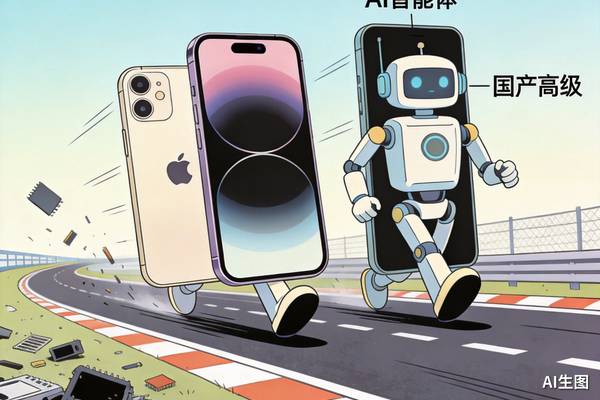
Apple continues to hold a significant presence in the smartphone market, raising questions about the competitive dynamics between its iPhones and domestic flagship models. While flagship smartphones from Chinese manufacturers strive for innovation, they face ongoing challenges due to Apple's established market influence and visibility.
Read More
This fall, the high-end smartphone landscape is experiencing notable shifts. The presale of the iPhone 18 Pro fell below the official price, marking a decrease in the scalper premium and a more relaxed market sentiment among distributors. This represents a crack in the previously reliable profit expectations associated with Apple's flagship models. In contrast, Apple's upcoming foldable iPhone Duo has garnered millions of reservations despite limitations in hardware and mass production capabilities, signaling a disruption in the foldable segment long dominated by domestic brands.
While Apple's new releases typically generate extensive discussion across various media platforms, the buzz surrounding recent launches from domestic brands like Honor, Vivo, and OPPO has been relatively muted. Concerns are arising as Apple's products, which do not always feature superior specifications or full functionality, still seem to enjoy an influential public perception. Meanwhile, domestic brands are making strides in areas such as foldable technology and on-device AI, but they continue to contend with Apple's established dominance.
Research by Liujiu Business Review delves into the current landscape, highlighting the crucial competition between domestic manufacturers and Apple. The question remains whether domestic brands can leverage advancements in AI to erode Apple's influence in the high-end market. As Apple progresses toward differentiation, domestic flagships are aligning their strategies to focus on new technologies.
Historically, Apple has been known for high premium pricing and streamlined product categories. However, the performance of the iPhone 18 Pro series suggests a divergence with the company's traditional model. The escalating price and demand seen in previous years for Apple’s phones has receded, with reports indicating that scalpers are hesitant to invest in the latest models. Some reports indicate a nearly 50% reduction in the premium charged for the iPhone 18 Pro compared to prior years.
In a stark contrast, the iPhone Duo’s reception has been overwhelmingly positive despite its imperfections. It has been highlighted that the hardware quality of the Duo does not necessarily surpass that of established domestic foldable phones, yet it retains a high price due to Apple's brand value. The yield rate for the iPhone Duo currently stands at over 60%, which suggests ongoing quality control challenges.
Conversely, domestic foldables, which have matured over several iterations, often see price reductions to incentivize broader market adoption. The apparent success of Apple's strategy raises questions about the evaluation criteria in the foldable market.
Since 2026, the mobile industry landscape has shifted from a focus solely on hardware specifications to the capabilities of AI systems. Domestic brands such as Honor, Nubia, and OPPO have focused on advancements in AI and system integration, aiming to establish differentiation outside traditional hardware competition.
However, despite their technological advancements, domestic brands encounter a formidable hurdle: entrenched consumer loyalty to Apple's ecosystem. The strong user inertia favoring Apple’s products limits the ability of domestic brands to attract high-end consumers, who often prioritize system fluency and cross-device compatibility over raw specifications. This established consumer mindset offers Apple a significant competitive edge.
In conclusion, while domestic manufacturers innovate rapidly, the challenge lies in converting technological advancements into user loyalty and market share. The competition between Apple’s brand strength and the evolving capabilities of domestic smartphones shapes the critical landscape of the high-end smartphone market.