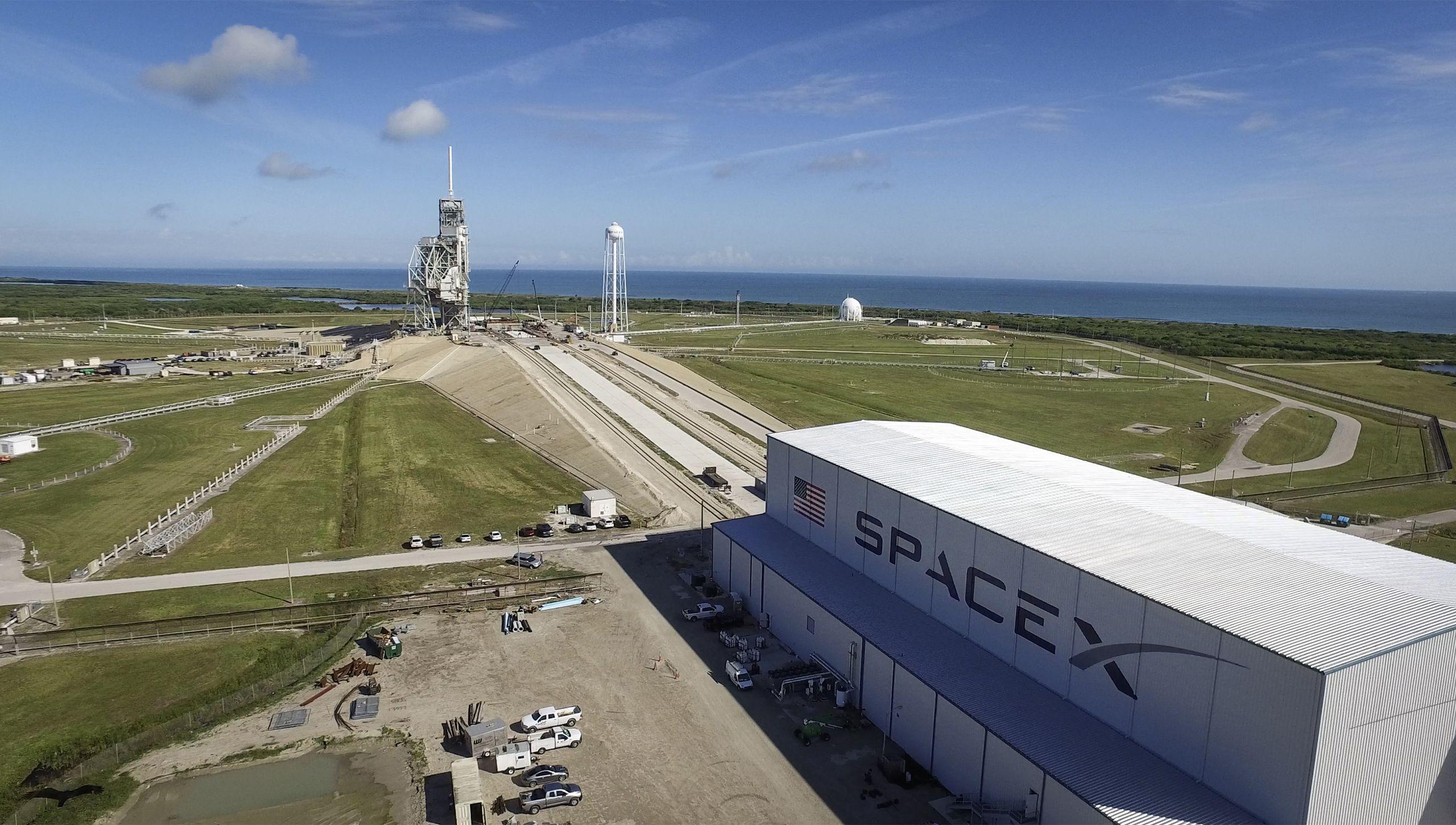
SpaceX is making significant modifications to historic Pad 39A at NASA's Kennedy Space Center in Florida to prepare for its first Starship launch from the site. This upcoming launch, potentially just a few months away, would mark a new phase as all 14 previous test flights of the Starship megarocket have originated from SpaceX's Starbase facility in South Texas. The last flight occurred on September 28, achieving orbital status for the first time.
Read More
According to Julianna Scheiman, director of NASA science and Dragon programs at SpaceX, “Things are going super well at 39A.” During an October 1 briefing before the Crew-13 astronaut mission to the International Space Station, she noted that the pad's new Starship launch tower is nearing completion, along with most other essential structures. "We’ve essentially done a lot of the initial build of the structures and the systems needed for launching Starship, and we're beginning to step into the sort of acceptance testing and operational testing prior to activation," Scheiman explained.
The modifications to Pad 39A began in late 2021. The extensive requirements for Starship are due to its status as the largest rocket ever built, standing approximately 408 feet (124 meters) tall, in contrast to SpaceX’s Falcon 9 and Falcon Heavy, each about 230 feet (70 meters) tall. Additionally, Starship is designed for full reusability, requiring different recovery operations compared to the Falcon rockets. The first stages of the Falcon 9 and Falcon Heavy land either at sea or on nearby landing pads, while Starship's booster and spacecraft are intended to return to the launch pad, where they will be caught by the tower's “chopstick” arms.
Moreover, Starship utilizes Raptor engines, which burn liquid methane and liquid oxygen, necessitating new fuel infrastructure, including a tank farm specifically for this propellant.
Before launching from Florida, SpaceX has plans for at least one more test flight from Starbase. The first launch from Kennedy Space Center could occur as soon as Flight 16. While specific dates for upcoming launches have not been formally announced, preliminary documentation points to October 19 and October 30 as possible dates for Flights 15 and 16, respectively.
Pad 39A has a storied history, originally constructed in the 1960s for NASA's Saturn V rocket, which launched the Apollo moon missions. The site was pivotal for iconic flights such as Apollo 8 in December 1968 and Apollo 11 in July 1969. This legacy will continue, as NASA has chosen Starship's Ship upper stage as the first crewed lunar lander for its Artemis program, aimed at establishing a lunar base in the coming years. The Ship is slated to fly for Artemis III in 2027, starting with a docking test in Earth orbit involving NASA's Orion capsule from Pad 39A.
In addition to work at Pad 39A, SpaceX is advancing on two pads at Cape Canaveral Space Force Station, SLC-37A and SLC-37B, which could facilitate 76 Starship launches per year between them. Scheiman highlighted visible progress on the Starship tower at Launch Complex 37 during her October 1 comments.
SpaceX also plans to establish a larger launch site, a $100 billion 12-pad complex in Louisiana, which is intended to support over 10,000 Starship missions annually by 2030. Many of these launches will contribute to constructing the next-generation Starlink broadband network and the Starmind AI data center constellation, estimated to include a million spacecraft, according to CEO Elon Musk.