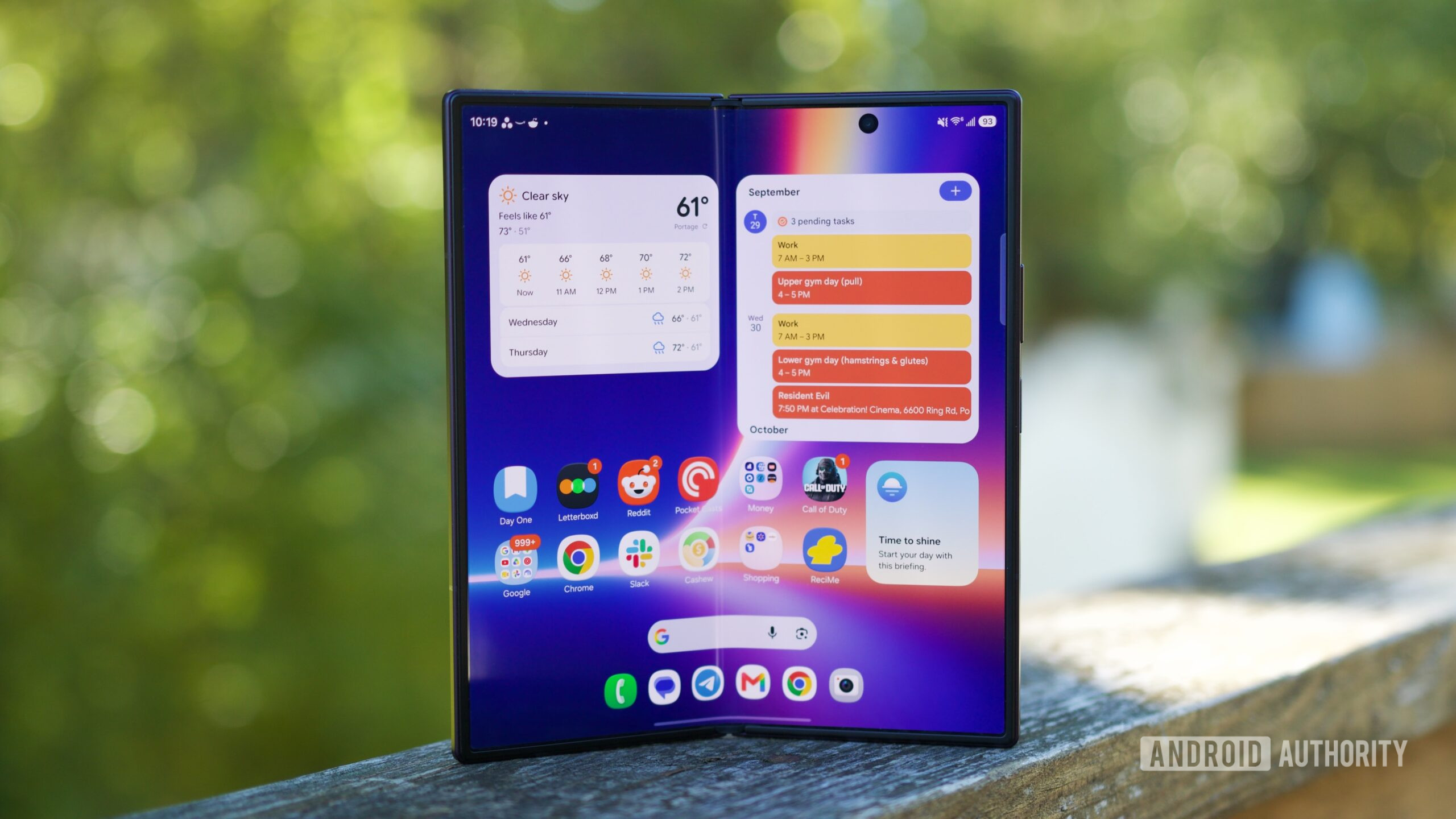
The Samsung Galaxy Z Fold 8 Ultra, released with high expectations, proves to be a notable addition to the foldable category but does not significantly change the landscape of Samsung’s offerings. It features solid hardware enhancements, an impressive inner display, and top-tier performance, making it a compelling option for those considering a foldable smartphone.
Read More
This device showcases a sleek design, weighing 215 grams and measuring just 4.1mm when unfolded. The updated hinge mechanism provides smooth opening and closing and allows the phone to stand securely in Flex Mode. Moreover, the Fold 8 Ultra is easier to open compared to its predecessor, addressing previous user concerns.
The device's display shines with a peak brightness of 3,000 nits, enhanced visibility thanks to a new anti-reflective layer, and a larger, high-quality inner screen. This makes it particularly suitable for outdoor use, outperforming competitors like the Motorola Razr Fold in glare reduction. Equipped with a Qualcomm Snapdragon 8 Elite Gen 5 chip, the Fold 8 Ultra ranks among the most powerful options available, outperforming many competitors in benchmark tests.
The Fold 8 Ultra also boasts impressive battery life, with a 5,000mAh battery providing up to a day and a half of usage on a single charge. Its primary 200MP camera continues to deliver sharp and colorful photos, including impressive capabilities for video recording.
However, the Galaxy Z Fold 8 Ultra is not without its flaws. The secondary cameras, including a 50MP ultrawide and a 10MP telephoto, fall short. The telephoto camera produces subpar quality at higher zoom levels, generating images that lack detail, especially when using zoom levels beyond 3x. The overall camera experience does not meet the standards expected of a device priced over $2,000.
Samsung's software experience also shows signs of stagnation. While it features useful multitasking capabilities, it lacks some innovations seen in competitors like the Razr Fold, which offers more intuitive software for managing multiple apps on the foldable screen.
Charging speeds are another area where the Fold 8 Ultra disappoints. Despite its updated 45W charging capability, performance improvements over the previous model are minimal, lagging behind competitors that provide much faster charging options. The absence of S Pen support and an IP68 rating—common in other premium devices—also detracts from its value proposition.
At a price point of $2,099.99, potential buyers must weigh whether the Fold 8 Ultra’s advantages justify its cost. While it excels in design and performance, users looking for superior camera capabilities may prefer alternatives like the Motorola Razr Fold or even the standard Galaxy Z Fold 8. With the influx of quality foldables on the market, the Galaxy Z Fold 8 Ultra may not be the first choice for everyone, reflecting the competitive nature of today's foldable smartphone landscape.