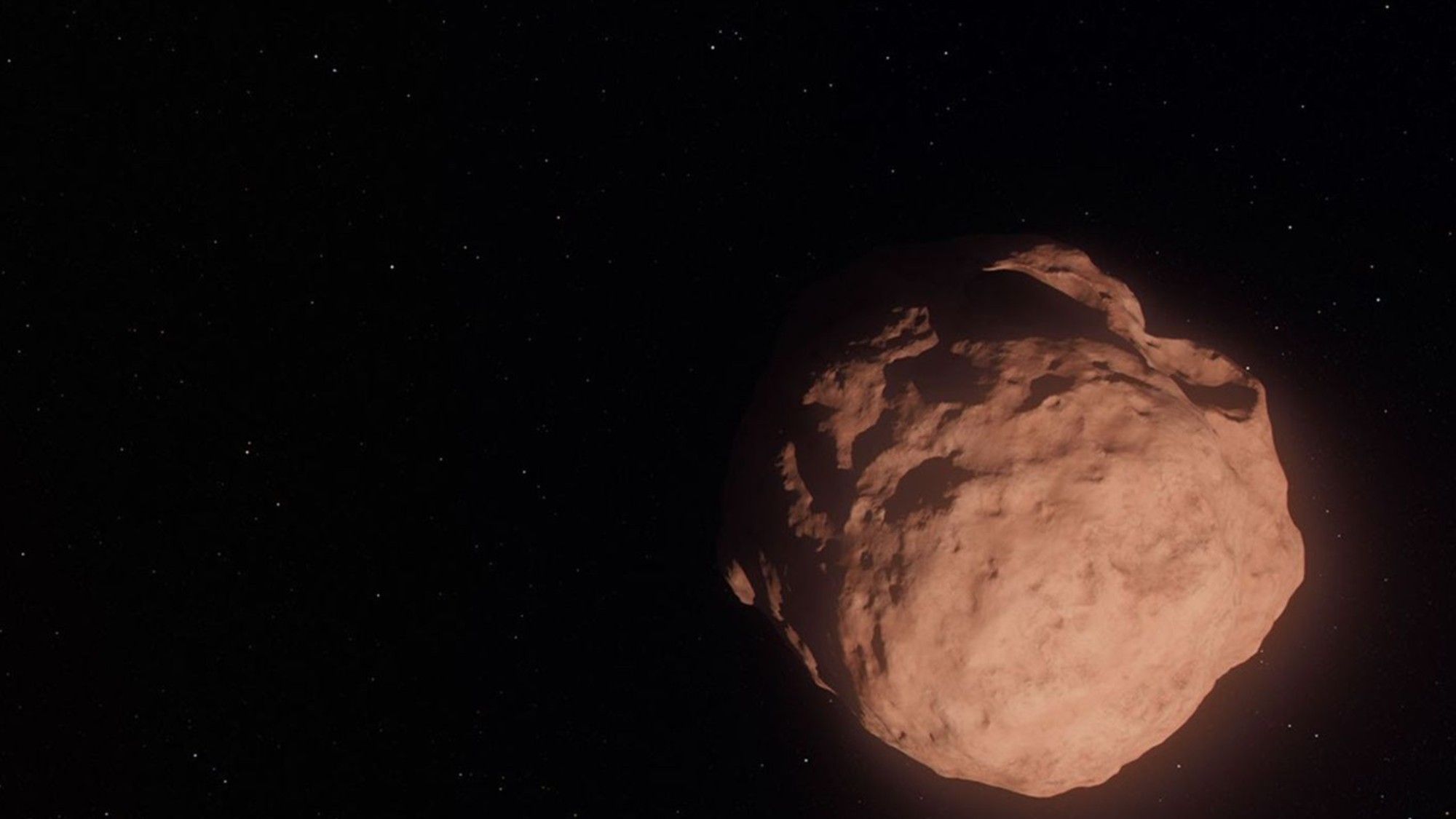
The Hubble Space Telescope and the James Webb Space Telescope have jointly discovered 27 new Trans-Neptunian Objects (TNOs), all less than 25 miles (40 kilometers) in diameter, with the smallest measuring just 6 miles (10 kilometers). These objects, located far beyond Neptune, provide new insights into the early history of the solar system.
Read More
Some TNOs originated in the outer regions of the solar system, where they formed as planetesimals but never transitioned into planets. Previous models suggested that these small bodies would be significantly impacted over time, resulting in surface composition changes reflected in their colors. However, observations led by PhD candidates Anastasia Morgan from Northern Arizona University and Marielle Eduardo from the University of Victoria indicated that these small TNOs appear remarkably pristine.
Morgan noted that one would expect the impacts to alter the surface composition, leading to different colors between larger TNOs and their smaller counterparts. The discovery that the small TNOs retain their original characteristics suggests they have preserved the conditions of their formation.
TNOs native to the Kuiper Belt have near-circular orbits aligned with the ecliptic plane and are categorized as dynamically 'cold'. In contrast, dynamically 'hot' TNOs, which were ejected from between Uranus and Neptune due to gravitational forces, have more elongated orbits that deviate significantly from the solar system's plane.
Despite being classified as dynamically hot, these TNOs also seem unaffected in terms of surface composition. David Trilling of Northern Arizona University remarked that they retain signatures of their birthplaces even after significant orbital changes.
The unexpected preservation of small TNO attributes raises questions about the impact rates in the distant reaches of the solar system. There are two possible interpretations: either impacts are less frequent than previously believed, or they occur without significantly altering small TNO surfaces.
The James Webb Space Telescope facilitated the measurement of TNO sizes, given that their brightness in infrared wavelengths primarily reflects size rather than surface reflectivity. Surprisingly, the observations revealed fewer very small TNOs than anticipated based on formation models.
Eduardo remarked on the intriguing result that both hot and cold TNOs exhibit similar size distributions, hinting at a consistent process in planetesimal formation across varying conditions.
The research, which represents the deepest survey of these distant regions, was published in The Astronomical Journal on September 8 in two separate papers detailing color and composition, as well as size distribution of the TNOs. These findings exemplify the advanced capabilities of both Hubble and JWST in exploring the solar system's unexplored territories.