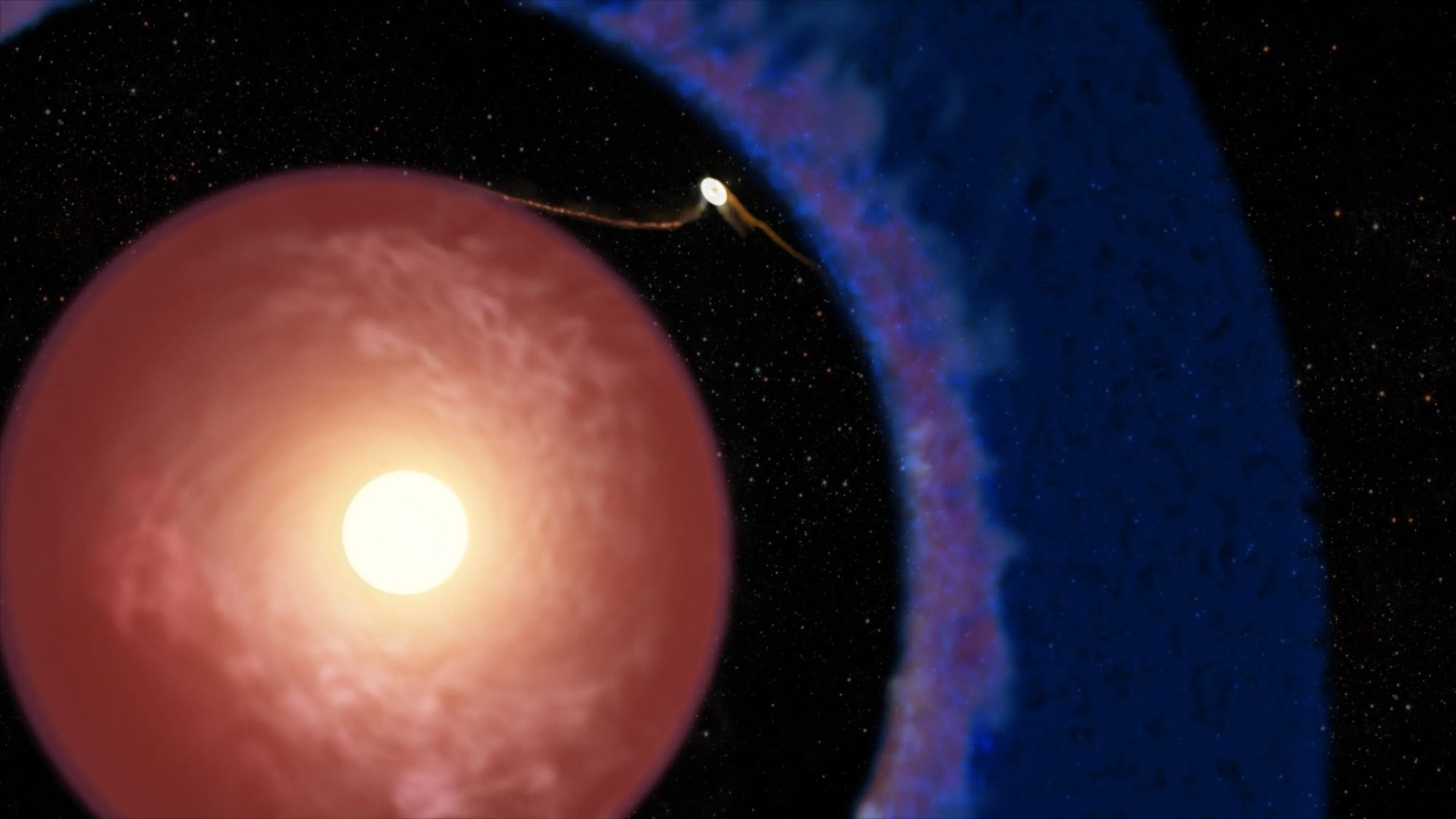
Astronomers have identified the youngest exoplanet recorded to date, named Elias 2-24 b, discovered through archival data. This newly found exoplanet, roughly the size of Jupiter, is believed to be less than a million years old and is located 450 light-years away from Earth, within the gas and dust disk surrounding its young host star.
Read More
The previous record for the youngest exoplanet was shared among four planets that are all over 5 million years old. Lucas Cieza, a professor at the Instituto de Estudios Astrofísicos in Chile and co-author of the study, stated that current planet-formation models struggle to explain the previously found young planets, implying that there may be unknown processes involved in planet formation.
The discovery was made by a team led by Andrea Bernardi, a doctoral candidate at the Universidad Diego Portales in Chile. The researchers analyzed archival data from the W.M. Keck Observatory in Hawaii, focusing on the star Elias 2-24. This investigation confirmed prior observations that hinted at the presence of a planet in a gap within the debris disk surrounding the star, originally suggested by observations from the Atacama Large Millimeter/submillimeter Array and the European Southern Observatory's Very Large Telescope.
The confirmation came from diagnosing data obtained using Keck's coronagraph, an instrument designed to block out starlight, allowing for direct observations of orbiting planets. The researchers concentrated on seven distant stars with similar debris disks, suspecting that planets might be found within these gaps. Bernardi noted that finding planets in such areas is crucial as they are the ones that create those gaps in the disks.
This discovery not only adds to our understanding of exoplanet formation but also gives scientists a unique opportunity to study the early developmental stages of planets. Cieza mentioned that the continuous formation of stars and planets means many exist at various evolutionary stages, although there remains a significant gap in the detections of very young planets. Looking ahead, researchers express hope that new advancements, particularly from the recently launched Coronagraph Instrument on NASA's Nancy Grace Roman Space Telescope, will facilitate more direct observations of such exoplanets and their atmospheres.
Bernardi concluded that the collaboration of multiple telescopes was essential for this discovery, which sits on the edge of current detection capabilities. With new technology, finding and studying young exoplanets like Elias 2-24 b will likely become easier in the future. This research was published on September 16 in The Astrophysical Journal Letters.