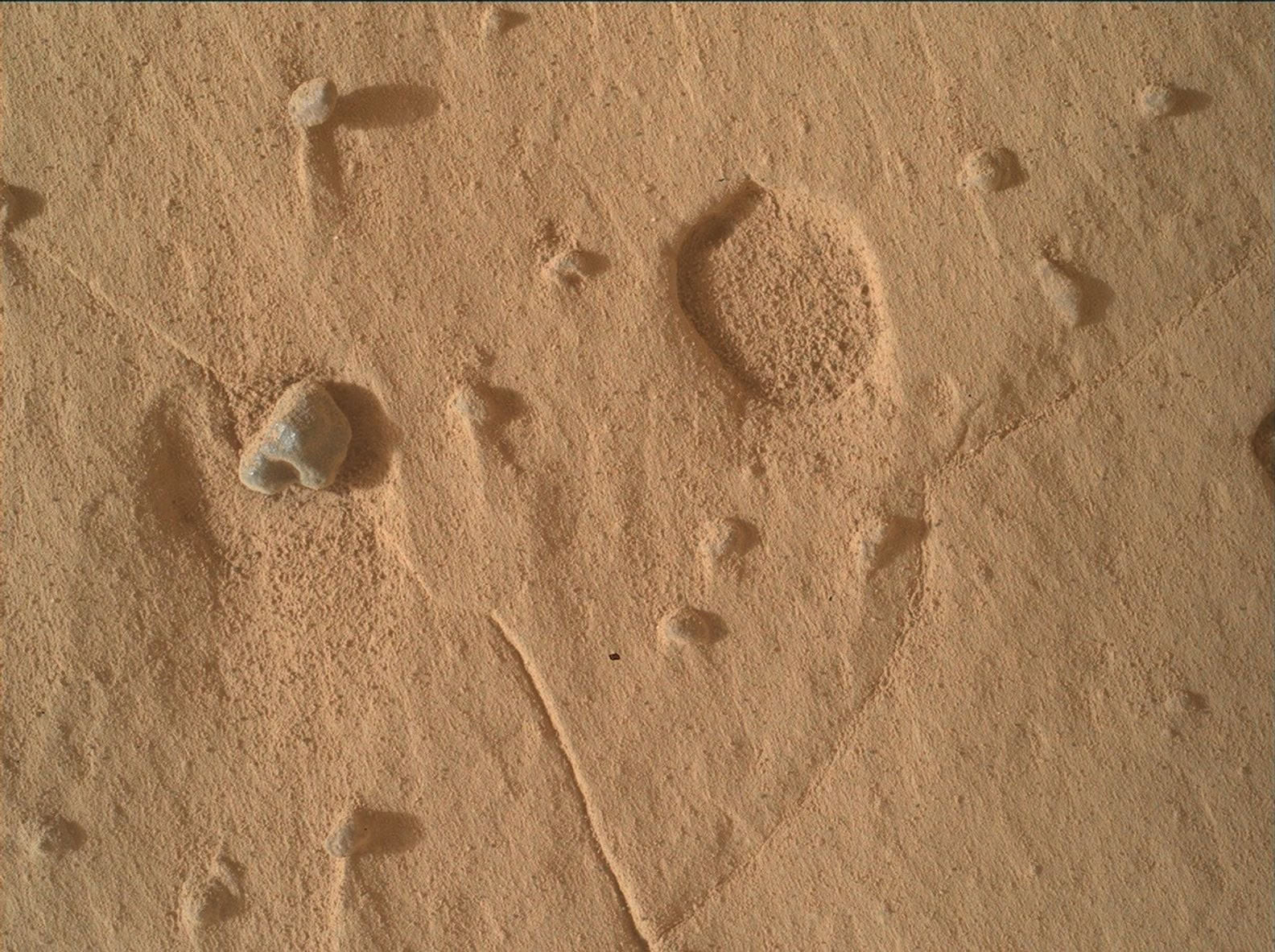
NASA’s Curiosity Rover, active on Mars for over 14 years, has made significant discoveries on Mount Sharp, including unusual formations described as broad, shallow pits etched into the Martian bedrock. These findings were reported by Space.com and intrigue scientists due to their distinctive characteristics.
Read More
According to NASA, these pits form when durable nodules or pebbles erode, creating voids. However, the newly discovered formations are wider and shallower than typical pits and lack any remnants of former occupants. Michelle Minitti, deputy principal investigator for the Mars Hand Lens Imager (MAHLI), pointed out the absence of identifiable contributing objects, which adds to the uniqueness of these structures. The analysis was supported by imagery captured using the Mastcam and ChemCam, which helped create detailed digital models of the pits.
In a related note, another image perceived as a “jellyfish” was later identified as a cosmic ray artifact affecting the rover's camera sensor. Beyond these discoveries, Curiosity continues to document various rock formations that resemble coral from Earth.
In a separate exciting find, Curiosity took images of a crater named “Antofagasta,” situated 32 feet wide, where formations appeared to resemble dragon scales. NASA classified these as honeycomb-shaped polygons intricately arranged across the Martian surface, revealing more complexity in the area's geology.
Curiosity's ongoing explorations not only shed light on Mars but also draw parallels with Earth's geological phenomena, such as recent drone footage showcasing glacial collapses in the Himalayas, highlighting the dynamic nature of both planetary landscapes.