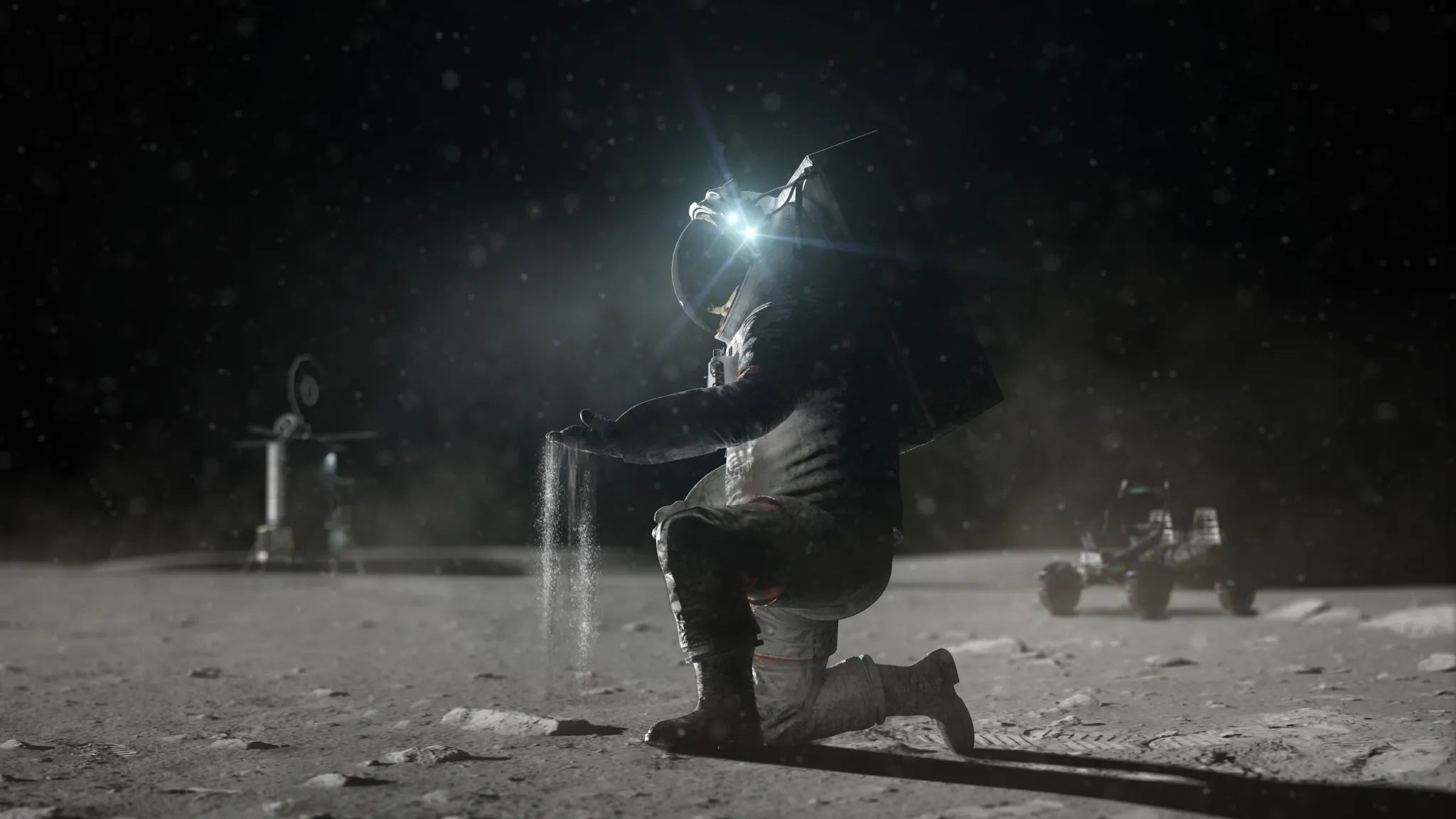
NASA is seeking innovative ideas to prevent static electricity from creating sparks that could endanger astronauts and spacecraft during lunar missions. The agency announced the "Lunar Grounding Challenge," which aims to mitigate scenarios where astronauts on the moon might act as "walking, high voltage capacitors." Submissions for the $150,000 competition are due by January 15, and details on requirements are available from NASA.
Read More
The agency's plans include deploying astronaut boots at the lunar south pole during the Artemis 4 or 5 missions in 2028, marking the first moon landing mission since Apollo 17 in 1972. However, simulations indicate that electric charge buildup from tribocharging (electric charge transfer between objects) and plasma charging can occur on spacesuits, especially in permanently shadowed regions where sunlight does not reach the lunar surface.
This situation risks charging astronauts' suits with electrons, leading to a significant imbalance with the positively charged lunar lander. NASA noted the danger occurs when an astronaut approaches the spacecraft, as a highly negatively charged suit could cause electrical arcing, potentially damaging the suit, igniting fires in the spacecraft's oxygen environment, or delivering electric shocks.
To address these concerns, NASA is asking for designs that safely discharge astronauts and their suits before they interact with the lander. The solutions must be compact regarding mass, volume, and power, and capable of functioning in extreme lunar temperature fluctuations. Additionally, the technology should support up to four moonwalks over a span of ten days.
Dust on the moon exacerbates the risk of arcing due to the increased potential for sparks to jump across larger gaps compared to a vacuum. NASA's challenge description underscores the importance of preventing any sudden electrical discharge that might contact the spacesuit or lander.
The competition will involve multiple phases, including concept design, refinement after review discussions, and final selection. Although no specific timeline for implementation was provided, NASA envisions establishing a long-term moon base for future missions throughout the 2030s.