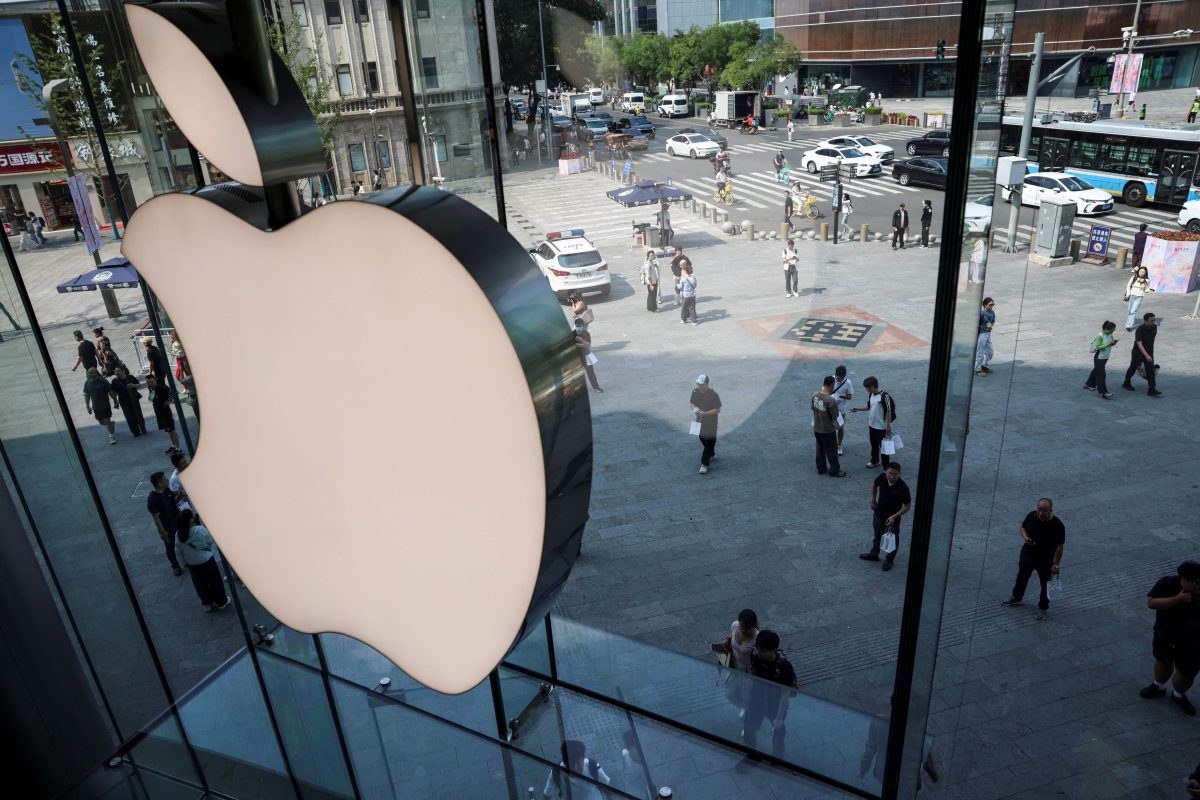
Demand for foldable smartphones is rising in China, presenting a significant opportunity for Apple as it prepares to launch its new foldable iPhone Duo. China accounts for more than a third of global foldable smartphone sales, making it the largest market for these devices, according to Counterpoint Research. Currently, Huawei leads the Chinese market in both foldable and traditional smartphones and introduced its first foldable model in 2019. Other local manufacturers, including Xiaomi, Vivo, Oppo, and Honor, have also been competing in this space for years.
Read More
Following Apple’s announcement of the iPhone Duo in early September, sales of Huawei’s Pura X Max—similar in size to the Duo—increased by approximately 77% in the four days following the announcement, according to Huawei. Since its release in April, the Pura X Max has sold over 1.4 million units. Additionally, Xiaomi's 18 Fold achieved record sales in its first week after launching earlier in September.
Richard Yu, chairman of Huawei’s consumer business, emphasized the company's significant investment in improving screen durability and camera performance in foldables. "I know how hard-earned these achievements were, which is why we are a leader in this business," Yu stated.
Although foldables represent a niche market—about 4% of smartphone sales in China and roughly 2% globally—many brands are optimistic about attracting high-end consumers. Huawei's Pura X Max starts at over $1,600, and its new Mate XT2 trifold phone is priced nearly at $3,000. The iPhone Duo will start at $1,999 in the U.S. and 15,999 yuan in China, nearly $2,400. Preorders for the iPhone Duo will begin on October 16, with a public release set for one week later.
Foldables offer larger screens that aid multitasking, an appealing feature for many users. Wang Rui, an 18-year-old college student in Beijing, considered purchasing the Mate XT2 but expressed interest in the iPhone Duo, which was not available for testing at the Apple store at the time. He remarked, "I like cutting-edge technology," and noted that Apple has yet to reach the level of innovation he sees in Huawei’s offerings.
Despite entering the market later, Counterpoint projects that Apple could sell up to six million foldable iPhones this year and capture 25% of the global foldable market, potentially surpassing Huawei's 22% share. Samsung, a pioneer in foldable technology but with limited presence in China, is expected to retain a significant global share of 38%.
In the U.S., Huawei faces restrictions due to a government blacklist imposed in 2019, preventing it from utilizing American technology. The company has responded by developing its own chips and operating systems. Its new Mate 90 Series smartphones, released recently, utilize innovative circuit layering technology to enhance performance amid a global semiconductor shortage that has elevated smartphone prices. Huawei customer Sun Lei expressed interest in the Mate XT2 but cited cost as a major factor in his purchasing decision.