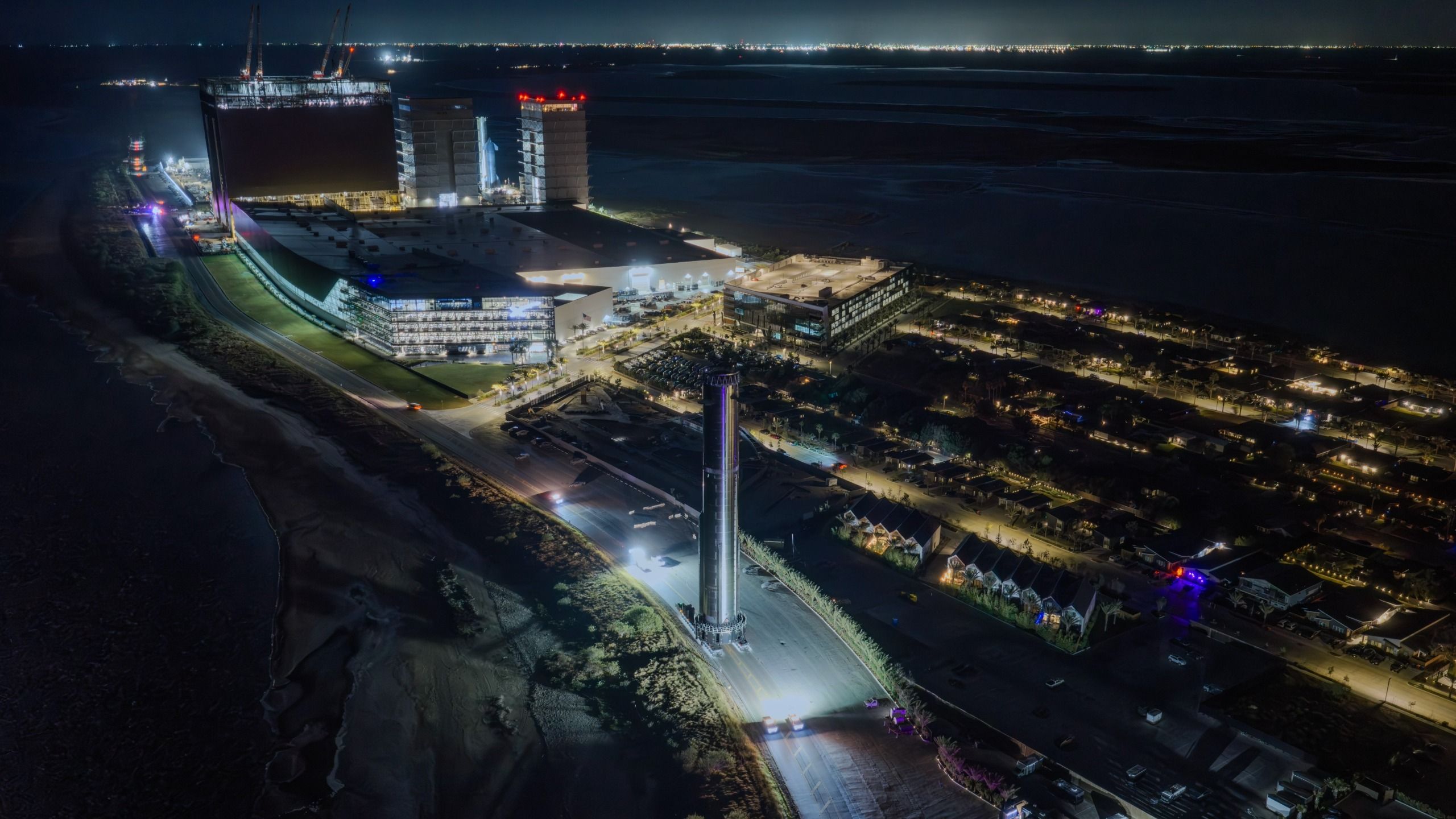
SpaceX is preparing for the first orbital flight of its Starship rocket, scheduled for September 28, 2026. The company rolled out its Super Heavy booster to the launch pad at SpaceX's Starbase facility in South Texas, as noted in an X post on September 21. The Super Heavy booster will soon be paired with the Starship upper stage on the launch mount.
Read More
This upcoming mission marks Starship's 14th flight test and represents its first attempt at an orbital launch. The plan involves Super Heavy making a controlled splashdown in the Gulf of Mexico about seven minutes after liftoff. Meanwhile, the Ship upper stage is expected to reach low Earth orbit and deploy 26 next-generation Starlink V3 satellites as part of the mission. This marks the beginning of the Starlink V3 broadband megaconstellation, which SpaceX CEO Elon Musk has indicated could eventually consist of around 100,000 satellites. In a previous flight test, Ship successfully deployed 20 V3 satellites but did so on a suborbital trajectory.
After completing its mission, Ship will orbit the Earth approximately six times before executing a splashdown in the Pacific Ocean off the coast of Chile, marking a new landing location for the vehicle, which previously returned from suborbital missions in the Indian Ocean.
Starship, the largest and most powerful rocket ever constructed, currently stands at 408 feet (124 meters) tall, with future versions expected to be even larger. Both stages of Starship are designed for rapid reusability, considered by SpaceX as the "holy grail of rocketry." The company envisions Starship transforming space travel and making the colonization of the Moon and Mars economically viable.