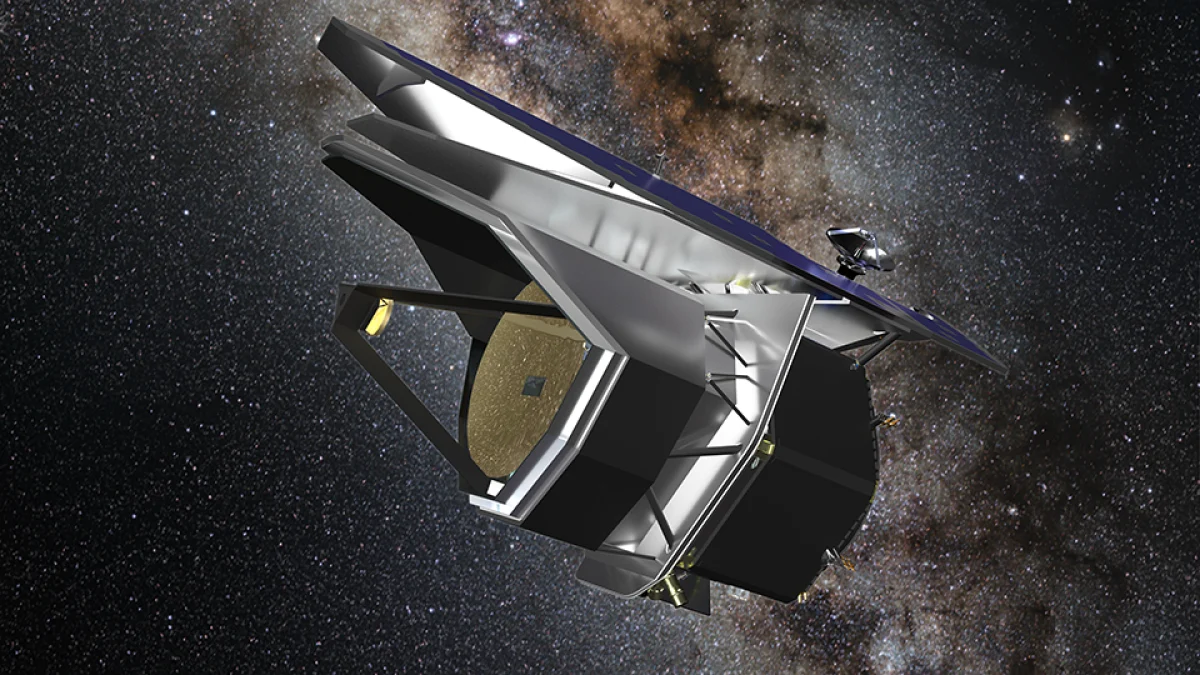
NASA is advancing plans for a new space telescope, the Probe Far-infrared Mission for Astrophysics, known as Prima, which could launch in the early 2030s if it successfully passes a final agency review. The mission aims to enhance our understanding of the cold, dusty universe, particularly in the far-infrared spectrum where current instruments have limitations.
Read More
Unlike the James Webb Space Telescope, which primarily focuses on shorter infrared wavelengths, Prima will target far-infrared waves, providing a complete infrared coverage for the first time. Alexandra Pope, the mission’s science team leader and an astronomy professor at the University of Massachusetts, Amherst, stated, "With the launch of the James Webb Space Telescope almost five years ago, we've pushed our understanding of the universe... But we've also uncovered mysteries that Webb can't resolve because it can't see the far-infrared part of the spectrum. That’s where Prima comes in."
The far-infrared spectrum is crucial because it allows astronomers to detect cold gas and dust that often obscure ordinary light. Previous attempts to capture this light from Earth were hampered by water vapor in the atmosphere and the glow from warm objects. Past missions like Europe’s Herschel space telescope and NASA’s SOFIA are no longer in service, leaving a gap in far-infrared observations.
Prima's design is based on an idea conceived in 1999 by Caltech physicist Jonas Zmuidzinas and NASA engineer Rick LeDuc. It features a 5.9-foot mirror with sensors that will operate at extremely low temperatures to enhance sensitivity. Zmuidzinas noted, "In this less-explored wavelength band, we have a chance to leap forward in sensitivity by about a factor of a 1,000. That’s very rare."
The mission is categorized as a "Probe Explorer," which bridges the gap between NASA’s small missions and larger observatories like Webb and the newly launched Nancy Grace Roman Space Telescope. This model was recommended by a panel of U.S. scientists in 2020 to afford more impactful science missions at a lower cost. Prima's budget is set at $1.2 billion, without including launch costs, significantly less than the nearly $10 billion spent on the Webb telescope.
The scientific goals for Prima include exploring how planets acquire water and air by studying about 200 disks of gas and dust around young stars, investigating the relationship between galaxies and their central supermassive black holes during critical growth periods, and examining the origins of the universe's elements by studying cosmic dust.
Pope and her team are preparing for a decade-long endeavor, anticipated to include numerous graduate and undergraduate students to assist in data analysis and research efforts.